How Do Thermal Cameras Work?
Thermal cameras offer a fascinating way to see the world beyond visible light. Instead of relying on colors and brightness, these devices translate heat into images that reveal patterns the human eye normally misses. From everyday tools to advanced technology, their impact continues to grow.
At the core of this technology is infrared radiation, a form of energy released by all objects with a temperature. Warmer surfaces emit more infrared energy, while cooler ones emit less. Thermal cameras capture this energy and turn it into a visual map of heat differences.
To fully understand how do thermal cameras work, it helps to look at their internal sensors. These sensors detect infrared radiation and convert it into electrical signals. Software then processes those signals, creating images where colors represent varying temperature levels.
This process allows thermal cameras to function in darkness, smoke, or fog without relying on external light. As a result, they are widely used in fields such as building inspection, medical screening, wildlife observation, and security, making heat a powerful source of visual information.
What Is a Thermal Camera?
A thermal camera is a specialized imaging device designed to detect heat rather than visible light. Unlike standard cameras that rely on illumination, thermal cameras capture infrared radiation naturally emitted by objects. This allows them to create images based on temperature differences, even in complete darkness.
Every object with a temperature above absolute zero emits infrared energy. A thermal camera senses this energy and translates it into a visual display, where different colors or shades represent varying levels of heat. Warmer areas appear brighter or more intense, while cooler areas show up darker, making temperature patterns easy to interpret.
At the heart of a thermal camera is an infrared detector, often called a microbolometer. This sensor responds to heat by changing its electrical resistance. Those changes are measured and converted into electronic data, which is then processed into a thermal image you can see on the screen.
Thermal cameras are valued because they do not require physical contact or visible light to operate. They can see through smoke, light fog, and darkness, making them especially useful in challenging environments where traditional cameras fail.
Because of these capabilities, thermal cameras are used across many industries. Firefighters use them to locate people in smoke-filled rooms, technicians use them to identify electrical faults, and builders rely on them to detect insulation problems. Their ability to visualize heat makes thermal cameras a powerful tool for analysis, safety, and efficiency.
How Do Thermal Cameras Work?
Thermal cameras work by detecting heat instead of visible light, allowing them to create images based on temperature differences. This technology relies on infrared radiation emitted by all objects and converts that energy into visual data. Understanding how do thermal cameras work requires exploring how heat is captured, processed, and displayed as clear, usable thermal images across different environments.
Detecting Infrared Radiation from Objects
All objects with a temperature above absolute zero emit infrared radiation. Thermal cameras are designed to sense this invisible energy rather than colors or reflected light. The amount of infrared radiation emitted increases as an object becomes warmer, creating natural heat patterns in the environment.
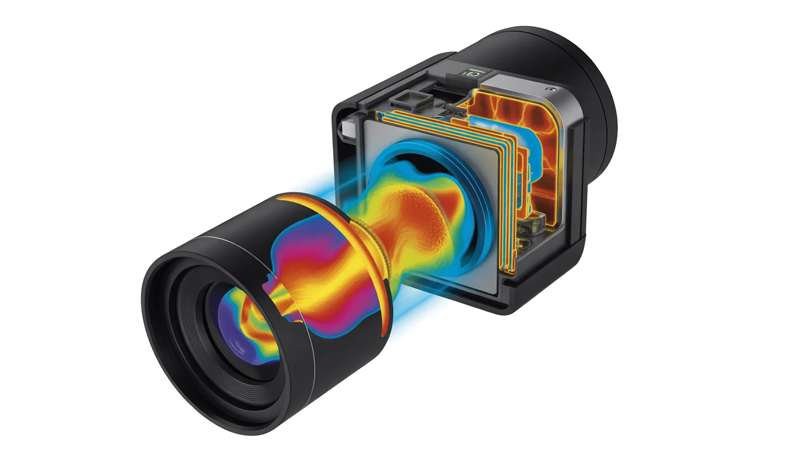
At the front of a thermal camera is a specialized lens made from materials like germanium. Unlike glass, these materials allow infrared radiation to pass through efficiently. The lens focuses the infrared energy onto the camera’s sensor without distortion.
The sensor, commonly known as a microbolometer, is made up of thousands of tiny heat-sensitive elements. Each pixel responds independently to the infrared radiation it receives, enabling precise temperature detection across the entire scene.
As infrared radiation strikes the microbolometer, it causes slight temperature changes in each pixel. These changes alter the electrical resistance of the sensor elements, forming the foundation of thermal image creation.
This process allows thermal cameras to detect heat signatures in total darkness, smoke, or low-visibility conditions, making them effective where conventional cameras cannot operate reliably.
Converting Heat into Electrical Signals
Once infrared radiation is detected, the thermal camera must translate heat differences into usable data. The microbolometer plays a central role by converting temperature variations into electrical signals that represent different heat intensities.
Each pixel in the sensor produces a small electrical response based on how much infrared energy it absorbs. Warmer areas generate stronger signals, while cooler areas create weaker ones. These signals are extremely precise and sensitive to even small temperature changes.
The camera’s internal electronics collect these signals simultaneously from every pixel. This raw data is then amplified to ensure accuracy and consistency across the entire image.
During this stage, noise reduction techniques are applied to remove interference that could distort the image. This ensures that temperature readings remain stable and reliable, even during extended use.
By converting invisible heat into measurable electrical information, thermal cameras bridge the gap between infrared radiation and visual interpretation, enabling accurate temperature-based imaging in real time.
Processing Data into a Thermal Image
After electrical signals are generated, the thermal camera’s processor transforms the data into a visual image. This processing stage is critical for turning raw temperature measurements into a clear and understandable display.
The processor assigns colors or grayscale values to different temperature ranges. Hotter areas may appear white, red, or yellow, while cooler regions appear blue, purple, or black, depending on the selected color palette.
Advanced algorithms analyze the temperature differences between pixels to enhance contrast. This makes subtle heat variations easier to detect, which is especially important for diagnostics and inspections.
Calibration is also applied during processing. The camera adjusts for ambient temperature, sensor drift, and environmental conditions to maintain consistent accuracy across different settings.
This processed output is displayed instantly on the screen, allowing users to interpret heat patterns visually. The ability to view temperature changes in real time is a defining feature of how do thermal cameras work.
Displaying and Interpreting Thermal Images
The final stage of thermal camera operation involves displaying the processed image in a format users can easily interpret. The screen presents a heat map that visually represents temperature distribution across the scene.
Different display modes and color palettes help users focus on specific temperature ranges. For example, firefighters may use high-contrast palettes to locate people, while inspectors may choose subtle gradients for detecting insulation issues.
Thermal cameras often include temperature measurement tools such as spot meters, area boxes, and thermal thresholds. These features allow users to quantify heat differences rather than relying only on visual cues.
Image refresh rates ensure smooth motion and accurate tracking of moving heat sources. Higher refresh rates are especially important in applications like surveillance or wildlife observation.
By combining accurate detection, intelligent processing, and clear visualization, thermal cameras provide reliable heat-based imaging that supports decision-making across industrial, medical, and safety-related fields.
What Is Thermal Imaging?
Thermal imaging is a technology that allows heat to be seen and analyzed through visual images. Instead of capturing visible light, it detects infrared radiation emitted by objects based on their temperature. This makes thermal imaging especially useful in conditions where lighting is poor or visibility is limited.
Every object above absolute zero releases infrared energy. Thermal imaging systems sense this energy and convert it into a visual representation, often displayed as a range of colors or shades. Warmer areas appear brighter or more intense, while cooler areas appear darker, clearly highlighting temperature differences.
The core of thermal imaging technology is an infrared sensor that responds to heat variations. These sensors measure even small temperature changes and translate them into electrical signals. Software then processes this data to form a thermal image that accurately reflects heat patterns in the scene.
One of the major advantages of thermal imaging is that it does not depend on external light sources. It can function in complete darkness, through smoke, light fog, or dust, making it valuable in challenging environments.
Thermal imaging is widely used across industries. It supports building inspections by identifying heat loss, assists medical screening by detecting abnormal temperature patterns, and enhances safety in firefighting, security, and wildlife monitoring. By turning heat into visible data, thermal imaging provides insights that are otherwise impossible to obtain.
Key Components of a Thermal Camera
A thermal camera is made up of several specialized components that work together to detect heat and convert it into a visible image. Each part plays a distinct role in capturing infrared radiation, processing temperature data, and presenting accurate thermal visuals. Understanding these components helps explain how thermal cameras deliver reliable performance across professional and industrial applications.
Infrared Lens System
The infrared lens is the first critical component of a thermal camera and serves a very different purpose than a standard optical lens. Unlike regular glass lenses, infrared lenses are made from materials such as germanium, chalcogenide glass, or zinc selenide. These materials allow infrared radiation to pass through efficiently without distortion or absorption.
The primary function of the infrared lens is to collect and focus heat energy emitted by objects in the scene. It directs this radiation precisely onto the camera’s sensor, ensuring that temperature differences are captured accurately across the entire field of view. Lens quality directly affects image sharpness, clarity, and measurement accuracy.
Infrared lenses are often coated with anti-reflective layers to minimize energy loss and reduce reflections that could interfere with readings. Different lenses offer varying focal lengths, allowing users to choose between wide-angle views for scanning large areas or narrow views for long-distance inspection.
Because infrared lenses are sensitive and expensive, they are typically protected by durable housings. A well-designed lens system ensures that the thermal camera gathers consistent and precise heat data, forming the foundation for accurate thermal imaging.
Thermal Detector (Microbolometer)
The thermal detector is the core sensing component of a thermal camera. Most modern thermal cameras use an uncooled microbolometer, which consists of a grid of tiny, heat-sensitive pixels. Each pixel reacts independently to infrared radiation by changing its electrical resistance based on temperature.
When infrared energy from the lens reaches the microbolometer, it causes minute temperature changes across the pixel array. These variations are proportional to the heat emitted by objects in the scene. The detector measures these changes with high sensitivity, often detecting temperature differences as small as fractions of a degree.
Microbolometers operate without cryogenic cooling, making them compact, energy-efficient, and suitable for handheld devices. Despite being uncooled, they deliver excellent thermal resolution and stability for most commercial and industrial uses.
The resolution of the detector, defined by the number of pixels it contains, directly impacts image detail. Higher-resolution detectors produce sharper images and allow more precise temperature analysis. The thermal detector transforms invisible heat into measurable signals, enabling the entire imaging process.
Signal Processing Electronics
Once the thermal detector captures heat data, signal processing electronics take over. These components convert raw electrical signals from the microbolometer into structured data that can be analyzed and displayed. This stage is essential for ensuring image accuracy and consistency.
The electronics amplify weak signals generated by small temperature differences, making them strong enough for reliable processing. At the same time, they apply noise reduction techniques to eliminate interference caused by environmental factors or sensor fluctuations.
Advanced processing algorithms correct for sensor drift, uneven pixel response, and ambient temperature variations. This calibration ensures that each pixel reflects true temperature values rather than distorted readings.
The processor also manages frame rates, contrast enhancement, and dynamic range adjustments. These functions allow the thermal camera to display smooth, real-time images even when temperature conditions change rapidly.
Without effective signal processing electronics, raw heat data would be unstable and difficult to interpret. This component plays a crucial role in transforming sensor output into accurate, usable thermal information.
Display and Imaging Software
The display and imaging software form the interface between the thermal camera and the user. After data is processed, it is translated into a visual thermal image that appears on the camera’s screen. This image represents temperature differences using colors or grayscale patterns.
Imaging software assigns specific colors to temperature ranges, creating clear visual contrast between hot and cold areas. Users can select different color palettes depending on their application, such as identifying heat leaks, electrical faults, or human presence.
The display system often includes measurement tools like temperature spot readings, area analysis boxes, and adjustable thresholds. These features allow users to extract numerical temperature data directly from the image.
High-quality screens ensure good visibility in bright or low-light environments. Touchscreen controls or buttons allow quick adjustments to settings such as focus, sensitivity, and palette selection.
Together, the display and software make complex thermal data easy to interpret, enabling effective decision-making based on accurate heat visualization.
How Thermal Cameras Detect Temperature
Thermal cameras detect temperature by sensing infrared radiation emitted from objects rather than relying on visible light. Every object with a temperature above absolute zero naturally releases infrared energy, and the amount of this energy increases as the object becomes warmer. Thermal cameras are designed to capture and analyze these invisible heat signals.
When infrared radiation enters the camera, it passes through a specialized infrared lens that focuses the energy onto a thermal sensor. This sensor, typically a microbolometer, is made up of thousands of tiny heat-sensitive pixels. Each pixel reacts independently to the amount of infrared energy it receives.
As the sensor absorbs infrared radiation, slight temperature changes occur within each pixel. These changes alter the electrical resistance of the sensor material. The camera measures these variations and converts them into electrical signals that represent temperature differences across the scene.
The camera’s internal processor then analyzes the electrical signals and calibrates them using reference data and environmental conditions. This step ensures that the temperature readings remain accurate and consistent, even when ambient temperatures fluctuate.
Finally, the processed data is translated into a visual thermal image. Colors or shades are assigned to specific temperature ranges, allowing users to clearly see heat patterns and temperature variations. This process enables thermal cameras to measure and display temperature without physical contact.
Types of Thermal Cameras
Thermal cameras are available in several types, each designed for specific applications, environments, and performance needs. While all thermal cameras detect infrared radiation, they differ in sensor technology, cooling methods, portability, and image resolution. Understanding the different types of thermal cameras helps users choose the right device for tasks ranging from industrial inspections to scientific research.
Uncooled Thermal Cameras
Uncooled thermal cameras are the most commonly used type in commercial and industrial applications. They rely on uncooled microbolometer sensors that operate at ambient temperatures, eliminating the need for complex cooling systems. This design makes them compact, lightweight, and energy-efficient.
Because uncooled cameras do not require cryogenic cooling, they are more affordable and durable than other types. They are widely used in building inspections, electrical maintenance, security monitoring, and firefighting. These cameras can detect small temperature differences and provide reliable thermal images for everyday professional use.
Uncooled thermal cameras typically have slightly lower sensitivity compared to cooled systems, but modern advancements have significantly improved their performance. They can accurately identify heat leaks, overloaded circuits, and mechanical faults without physical contact.
Their low maintenance requirements and quick startup time make them ideal for handheld and portable devices. Uncooled thermal cameras offer a practical balance between performance, cost, and usability across a wide range of industries.
Cooled Thermal Cameras
Cooled thermal cameras use infrared detectors that are maintained at extremely low temperatures using cryogenic cooling systems. Cooling the sensor reduces thermal noise, allowing the camera to detect very small temperature differences with exceptional sensitivity and accuracy.
These cameras are commonly used in scientific research, aerospace, military, and long-range surveillance applications. Their ability to capture detailed thermal images at great distances makes them suitable for tracking objects, monitoring high-speed events, and performing advanced thermal analysis.
Cooled thermal cameras typically offer higher resolution, faster frame rates, and improved image clarity compared to uncooled models. However, their cooling systems increase size, weight, power consumption, and overall cost.
Due to their complexity, cooled cameras require regular maintenance and longer startup times. Despite these limitations, they remain essential for applications that demand extreme precision and long-range thermal detection.
Handheld Thermal Cameras
Handheld thermal cameras are designed for portability and ease of use. These compact devices integrate infrared sensors, displays, and processing units into a single unit that can be carried and operated with one hand.
They are commonly used by electricians, HVAC technicians, building inspectors, and maintenance professionals. Handheld cameras allow users to quickly scan surfaces, identify temperature anomalies, and capture thermal images on the spot.
Modern handheld thermal cameras often include advanced features such as image storage, wireless connectivity, and adjustable color palettes. Some models also combine thermal and visible-light imaging to provide better context for inspections.
Their convenience and versatility make handheld thermal cameras a popular choice for routine inspections and troubleshooting tasks where mobility and speed are essential.
Fixed and Mounted Thermal Cameras
Fixed thermal cameras are designed for continuous monitoring in stationary installations. These cameras are mounted on walls, ceilings, vehicles, or outdoor structures and operate around the clock without manual intervention.
They are widely used in security systems, industrial process monitoring, traffic management, and perimeter surveillance. Fixed cameras provide consistent thermal data over time, making them ideal for detecting changes or anomalies in controlled environments.
These systems often integrate with automated software that triggers alerts based on temperature thresholds or motion detection. Weather-resistant housings allow outdoor models to function in harsh conditions.
Fixed thermal cameras offer reliable, long-term thermal monitoring where constant observation and automated analysis are required.
Thermal Cameras vs Night Vision
Thermal cameras and night vision devices are often compared because both are used for seeing in low-light or dark environments. However, they work in very different ways and are designed for different purposes. Understanding these differences helps in choosing the right technology for specific applications.
Thermal cameras detect infrared radiation emitted by objects based on their temperature. They do not rely on any visible or ambient light, which allows them to function in complete darkness, smoke, fog, or light vegetation. Warm objects such as people, animals, and machines stand out clearly against cooler backgrounds.
Night vision devices, on the other hand, amplify available light from sources like the moon, stars, or infrared illuminators. They produce images based on reflected light rather than heat. This makes night vision effective in low-light conditions but far less useful in total darkness or obscured environments.
One key difference is how each technology handles camouflage and concealment. Thermal cameras can detect heat signatures even when objects are partially hidden, while night vision can be blocked by shadows or physical barriers that prevent light reflection.
Thermal cameras are commonly used in firefighting, search and rescue, inspections, and security monitoring. Night vision is often preferred for navigation, wildlife observation, and military operations where natural-looking images are important.
Both technologies serve valuable roles, but thermal cameras excel at detecting heat-based activity, while night vision is better suited for enhancing visual detail in low-light environments.
| Feature | Thermal Cameras | Night Vision |
|---|---|---|
| Working Principle | Detect infrared radiation (heat) emitted by objects | Amplify available visible and near-infrared light |
| Light Requirement | No light required | Requires some ambient or infrared light |
| Performance in Darkness | Works in complete darkness | Limited in total darkness |
| Visibility Through Smoke/Fog | Effective through smoke, light fog, and dust | Poor performance in smoke or fog |
| Detection Capability | Identifies heat signatures of people, animals, and objects | Shows reflected light and surface details |
| Image Appearance | Heat-based color or grayscale images | Green-tinted, natural-looking images |
| Use in Camouflage Detection | Detects hidden or camouflaged heat sources | Can be fooled by shadows or camouflage |
| Common Applications | Firefighting, inspections, security, search and rescue | Surveillance, navigation, wildlife observation |
| Detail Recognition | Less visual detail, more heat contrast | Better visual detail and depth perception |
| Cost Range | Generally higher | Generally lower |
Advantages and Limitations of Thermal Imaging
Thermal imaging offers a powerful way to visualize heat that cannot be seen with the naked eye. One of its biggest advantages is the ability to operate without visible light. Thermal imaging works in complete darkness and can still provide clear results, making it highly effective in low-visibility environments.
Another major advantage is its ability to detect temperature differences quickly and from a distance. This makes thermal imaging useful for identifying heat loss in buildings, locating electrical faults, spotting overheating machinery, and finding people or animals during search and rescue operations.
Thermal imaging is also non-contact and non-invasive. It allows inspections and monitoring to be carried out safely without touching equipment or disrupting operations. This improves safety and efficiency across many industrial, medical, and security applications.
Despite its strengths, thermal imaging has limitations. It does not show fine visual details such as facial features, text, or colors. The images represent heat patterns rather than physical appearance, which can make identification difficult in some situations.
Environmental factors can also affect accuracy. Rain, heavy fog, reflective surfaces, and extreme weather conditions may distort thermal readings or reduce image clarity.
Additionally, high-quality thermal imaging systems can be expensive. While costs have decreased over time, advanced models with higher resolution and sensitivity still require a significant investment, which may limit accessibility for some users.
Frequently Asked Questions (FAQs)
How Do Thermal Cameras Work Without Light?
Thermal cameras work without visible light because they detect infrared radiation instead of brightness or color. You don’t need sunlight, lamps, or moonlight for them to function. Every object around you emits heat based on its temperature, and thermal cameras sense this energy. The camera converts the heat differences into an image, allowing you to see people, animals, or objects even in complete darkness, smoke, or fog.
What Kind of Heat Do Thermal Cameras Detect?
Thermal cameras detect infrared radiation emitted by objects with a temperature above absolute zero. You are constantly emitting infrared energy, just like buildings, vehicles, and animals. When you view a thermal image, warmer objects appear brighter or in stronger colors, while cooler objects appear darker. This is how thermal cameras visually represent temperature differences across a scene.
How Do Thermal Cameras Convert Heat Into Images?
To understand how do thermal cameras work, you need to look at their sensors. The camera uses a thermal detector called a microbolometer, which reacts to infrared radiation. When heat hits the sensor, it changes the electrical resistance of tiny pixels. The camera’s processor converts those electrical signals into a thermal image that you can see on the display in real time.
Can Thermal Cameras Measure Exact Temperature?
Yes, thermal cameras can measure temperature, but accuracy depends on calibration, distance, and surface conditions. When you point a thermal camera at an object, it estimates temperature based on emitted infrared radiation. Factors like reflective surfaces, humidity, and emissivity can affect readings, so proper settings and technique are important for reliable measurements.
Why Can Thermal Cameras See Through Smoke and Fog?
Thermal cameras can see through smoke and light fog because infrared radiation is less affected by airborne particles than visible light. When visibility is poor, your eyes and regular cameras struggle, but heat signatures still pass through. This allows thermal cameras to identify people, fires, or hot equipment in environments where vision is otherwise blocked.
Are Thermal Cameras the Same as Night Vision?
No, thermal cameras and night vision work differently. Night vision amplifies available light, while thermal cameras detect heat. If you are in total darkness with no light source, night vision may fail, but thermal cameras will still work. This difference is why thermal imaging is widely used in firefighting, inspections, and search and rescue operations.
Conclusion
Thermal cameras have transformed the way you observe and analyze the world by making heat visible. Instead of relying on light, these devices interpret infrared radiation and convert it into clear images that highlight temperature differences. This capability allows you to detect hidden issues, movement, or heat patterns that would otherwise go unnoticed.
By understanding how do thermal cameras work, you can better appreciate the technology behind their accuracy and reliability. From infrared lenses and thermal sensors to advanced processing software, each component plays a vital role in turning invisible heat into meaningful visual data.
Today, thermal cameras are used across many fields, including inspections, safety, security, and research. As the technology continues to evolve, learning how do thermal cameras work helps you make informed decisions about their practical applications and long-term value.