What Camera Does Emma Chamberlain Use
Curiosity around the tools behind popular creators is natural, especially when their videos feel personal and effortless. Viewers notice the texture, movement, and intimacy of the footage, and wonder how such a simple style can feel so intentional.
Emma Chamberlain’s rise reshaped online video, favoring honesty over polish and spontaneity over scripts. Her visuals never distract from her voice, yet they subtly support her storytelling, making the camera feel like a companion rather than a production barrier.
That balance fuels constant searches for What Camera Does Emma Chamberlain Use, as fans hope gear explains the vibe. In reality, understanding her setup offers insight, not shortcuts, and the discussion often circles around What Camera Does Emma Chamberlain Use as part of the curiosity.
Looking at her camera choices helps frame how creators match tools to personality, pace, and platform. It’s less about copying specs and more about learning how simplicity, comfort, and consistency shape a recognizable visual voice.
What Camera Does Emma Chamberlain Use?
When people ask What Camera Does Emma Chamberlain Use, they’re usually trying to decode the effortless, diary-like quality of her videos. Emma’s content never feels overproduced, yet it’s visually engaging enough to keep viewers immersed. That balance comes largely from choosing cameras that support movement, flexibility, and authenticity rather than cinematic perfection.
In the early stages of her YouTube career, Emma Chamberlain frequently used compact Canon G7 X–style cameras. These point-and-shoot models became iconic among vloggers because they’re lightweight, easy to carry, and deliver reliable autofocus and stabilization. For Emma, this meant she could film anywhere, anytime, without breaking the natural flow of her thoughts.
As her career evolved, so did her equipment. She began incorporating mirrorless cameras like the Canon EOS M50, which offered better low-light performance and interchangeable lenses while still remaining portable. This upgrade subtly improved image quality without sacrificing the handheld, conversational feel her audience connected with.
Emma has also experimented with film and disposable cameras, especially outside of YouTube. Her photography projects and social posts often feature grain, blur, and imperfections. These choices reinforce her creative identity, proving that technical flaws can become stylistic strengths when used intentionally.
Ultimately, the answer to What Camera Does Emma Chamberlain Use isn’t just one model. It’s a rotating mix of simple, creator-friendly cameras chosen to match her mood and message. Her approach shows that the best camera is the one that lets creators stay present, honest, and creatively free.
What Camera Is Emma Chamberlain Using Right Now?
When fans and creators alike wonder What Camera Is Emma Chamberlain Using Right Now?, the answer isn’t just one single model — it’s a mix that fits her evolving style and varied content needs. Emma’s setup balances portability, quality, and that signature authentic vibe her audience loves.
At the core of her current gear is the Canon EOS M50 Mark II, a mirrorless camera that delivers sharp video, reliable autofocus, and versatility whether she’s filming daily vlogs, lifestyle clips, or on-the-go moments. This has become a go-to because it blends higher-quality capture with ease of use, something that suits Emma’s candid, personable filming style.
In addition, she often reaches for a Sony FDR-AX43 camcorder for travel footage or extended recording sessions. Camcorders like this are great for longer shots and built-in stabilization, which helps keep footage smooth when she’s walking or exploring.
Beyond those main cameras, Emma doesn’t shy away from simpler, handheld options for specific shots. Some of her recent vlog clips show the influence of compact cameras like the Sony CX405 Handycam, beloved in the community for its nostalgic, home-video feel.
In the world of content creation, gear evolves as creators refine their vision. For Emma, the current mix — from mirrorless camera to camcorder and handheld options — reflects a commitment to authentic storytelling without over-production.
Cameras Emma Chamberlain Has Used Over the Years
Across different phases of her career, Emma Chamberlain has relied on a range of cameras that reflect both her growth as a creator and the changing demands of her work. Rather than chasing the most expensive gear, her choices have consistently aligned with ease of use, mobility, and creative freedom. From simple compact cameras to more advanced setups, each stage tells a story of experimentation, comfort, and evolving visual intent.
Early YouTube Days
In her earliest YouTube days, Emma leaned heavily on entry-level and compact cameras that were popular among beginner vloggers at the time. These cameras were small, lightweight, and unintimidating, making them ideal for someone filming alone in bedrooms, cars, and everyday environments. The simplicity allowed her to focus on speaking freely rather than managing complicated camera settings.
Compact point-and-shoot cameras worked especially well because they offered decent video quality straight out of the box. Autofocus was fast enough to keep her face sharp, and built-in microphones captured clear audio in quiet spaces. For a new creator, this eliminated the need for external lenses, microphones, or stabilization gear.
Another reason these cameras fit her early style was portability. Emma’s content relied on movement—jump cuts, walking monologues, and spontaneous filming sessions. Compact cameras could be picked up and used instantly, which matched her impulsive, stream-of-consciousness approach to storytelling.
For beginner vloggers in general, these cameras represented accessibility. They were affordable, widely available, and forgiving for users with little technical knowledge. Emma’s success during this phase showed that personality and honesty mattered far more than cinematic visuals.
Breakout Era on YouTube
As Emma’s channel began to grow rapidly, her camera choices evolved to support longer filming sessions and more dynamic environments. During this breakout era, she started incorporating popular mirrorless and advanced compact vlogging cameras that offered noticeable improvements in image quality without sacrificing portability.
These cameras brought better low-light performance, which was important as her videos expanded beyond bedrooms into cafés, city streets, and travel settings. Improved sensors allowed footage to look cleaner and more detailed, even in imperfect lighting conditions. This subtly elevated the production value while keeping the same raw, conversational tone.
Stabilization also played a major role in this phase. Mirrorless and vlogging-focused cameras provided either in-body stabilization or digital stabilization that reduced shakiness during handheld filming. This made her fast-paced movements easier to watch while maintaining a casual, handheld aesthetic.
Another advantage was flexibility. Interchangeable lenses allowed Emma to experiment with wider angles for vlogging or tighter shots for sit-down segments. Despite these upgrades, her videos never felt overly polished. The cameras supported her style rather than redefining it, reinforcing that technical improvements were meant to enhance comfort and consistency, not transform her voice.
Recent & Professional Work
In more recent years, Emma’s camera usage has expanded alongside her professional opportunities. For fashion shoots, brand campaigns, and high-production videos, she has access to higher-end camera bodies designed for commercial-quality output. These cameras deliver superior color depth, dynamic range, and sharpness suitable for editorial and advertising work.
High-end cameras are particularly valuable for controlled environments like studio shoots or campaign visuals. They pair well with professional lighting setups and lenses, allowing photographers and videographers to capture detailed textures, accurate skin tones, and stylized compositions that align with luxury branding.
For video projects tied to partnerships or large-scale productions, these cameras also support advanced codecs and frame rates. This ensures footage holds up through post-production processes such as color grading and editing, which are essential for polished final results.
Despite access to premium gear, Emma’s involvement with these cameras is often situational. They serve specific use cases rather than replacing her more casual tools entirely. The contrast highlights how different cameras support different creative goals—from intimate self-shot videos to visually refined professional campaigns—without forcing a single aesthetic across all her work.
Why Emma Chamberlain Chooses These Cameras
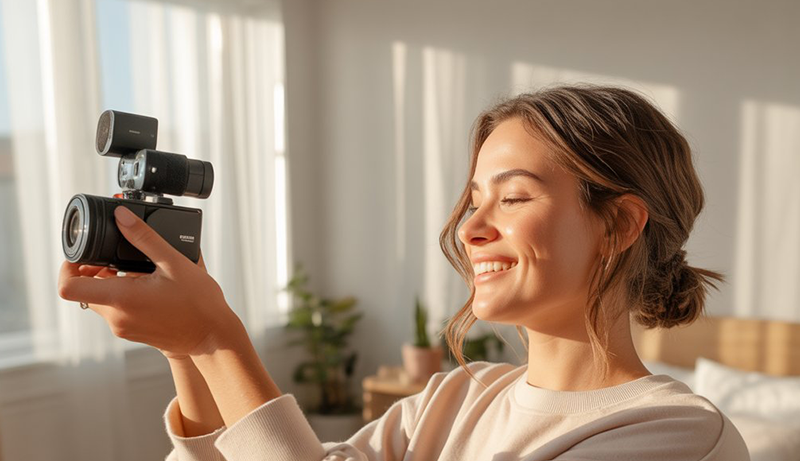
When looking at why Emma Chamberlain chooses the cameras she does, comfort and ease of use stand out first. Her filming style is spontaneous and conversational, which means the camera can’t slow her down. Lightweight, intuitive cameras let her record thoughts as they happen, keeping her content natural rather than staged.
Portability is another major factor. Emma often films on the move—walking, traveling, or switching locations quickly. Cameras that are compact and easy to carry allow her to vlog without extra gear or setup time. This flexibility supports her fast-paced editing style and keeps her videos visually dynamic.
Image quality matters, but only to a point. Emma favors cameras that deliver clean, reliable footage without feeling overly cinematic. Sharp focus, decent low-light performance, and stable handheld video help maintain watchability while preserving the raw, diary-like aesthetic her audience expects.
Creative freedom also influences her choices. Using cameras that don’t require constant technical adjustments lets her focus on storytelling instead of settings. This freedom encourages experimentation, whether that means quick cuts, unconventional framing, or intentionally imperfect visuals.
Finally, her camera decisions reflect practicality rather than trends. Instead of chasing the newest or most expensive gear, Emma sticks to tools that fit her workflow and personality. The result is content that feels consistent, personal, and honest—proof that the right camera is the one that supports creativity, not overshadows it.
Lenses Emma Chamberlain Uses
When it comes to the lenses Emma Chamberlain uses, the focus is on versatility and simplicity. Rather than stacking her kit with dozens of options, she tends to choose lenses that match her natural, conversational filming style and support a range of shooting scenarios. The goal is flexibility without complexity, which keeps her workflow fluid and creative.
A popular choice in her setup has been a wide-angle lens, especially for vlogging. Wide lenses let Emma capture more of her environment while keeping her close to the frame, which feels more engaging for viewers. This is particularly useful for walking shots, car vlogs, or filming in tight spaces where a standard lens might feel too restrictive.
Alongside wide angles, Emma often uses standard zoom lenses that cover classic everyday focal lengths. These lenses are workhorses for sit-down videos, casual lifestyle footage, and general content where a natural perspective is preferred. The ease of zooming without changing lenses helps sustain momentum during long shooting days.
For more artistic or shallow-depth shots, some of her higher-end setups include fast prime lenses. These lenses produce smooth background blur and perform well in low light, making them useful for fashion shoots, cinematic cutaways, or segments with controlled lighting. Even here, the focus remains on lenses that enhance storytelling rather than showcase technical prowess.
Part of choosing lenses is also about sound workflow synergy—picking gear that feels intuitive and won’t interrupt her creative flow. Emma’s lens choices reflect an understanding that great content comes from moments and energy, not just optics.
Ultimately, her lens kit supports her varied content needs, whether casual daily vlogs or more polished visuals. Each lens serves a purpose while keeping her filming setup manageable and aligned with her authentic style.
Does Emma Chamberlain Use a Phone Camera?
When people ask whether Emma Chamberlain uses a phone camera, the short answer is yes—at times. Like many modern creators, she doesn’t limit herself to one device. Phone cameras play a role in her creative process, especially when speed, convenience, or spontaneity matters more than technical precision.
Phone cameras are ideal for capturing quick moments. When inspiration hits unexpectedly, pulling out a phone is faster than setting up a dedicated camera. This aligns perfectly with Emma’s unfiltered, in-the-moment style, where thoughts and reactions are often recorded as they happen rather than planned in advance.
Phones also fit naturally into social media workflows. For platforms like Instagram or casual behind-the-scenes content, phone footage feels native and authentic. Vertical framing, built-in stabilization, and easy editing make phones practical tools for content that doesn’t need extensive post-production.
Another reason phone cameras work for Emma is discretion. Filming in public spaces can feel less intrusive with a phone than with a full camera setup. This helps her stay relaxed on camera and capture more genuine interactions without drawing attention.
That said, phone cameras don’t replace her primary filming gear. Instead, they complement it. Emma uses phones as creative tools rather than compromises, choosing them when the moment calls for simplicity and immediacy.
Ultimately, her use of a phone camera reinforces a larger theme in her content: authenticity over perfection. The device matters less than the honesty of the moment being captured.
Emma Chamberlain’s Full Filming Setup (Beyond the Camera)
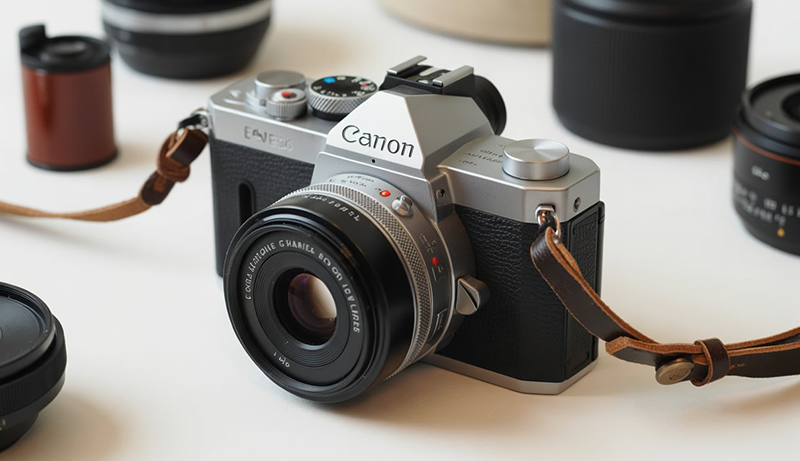
While much attention is placed on what camera Emma Chamberlain uses, her overall filming setup extends far beyond the body and lens. Audio choices, stabilization tools, and editing workflows play a major role in shaping her recognizable style. Together, these elements create content that feels intimate, effortless, and emotionally engaging without relying on complex or flashy production techniques.
Audio Gear
Audio is one of the most understated yet critical parts of Emma’s filming setup. In many of her earlier and more casual videos, she relied heavily on built-in camera microphones. These internal mics worked because her filming environments were often quiet, controlled spaces like bedrooms or cars, allowing her voice to remain clear without additional equipment.
As her content diversified, external microphones became more relevant, particularly for situations with background noise or movement. Small on-camera microphones or compact wireless systems provide cleaner sound while remaining unobtrusive. These options preserve mobility and keep her setup lightweight, which aligns with her preference for minimal gear.
Good audio matters deeply in vlog-style content because the creator’s voice is the focal point. Emma’s videos are conversational, reflective, and often emotionally driven. Any distortion, echo, or inconsistency would break immersion. Prioritizing clear audio ensures viewers stay connected to her thoughts rather than distracted by technical issues.
Another reason her audio setup stays simple is comfort. Overly complex microphone rigs can feel intimidating or restrictive. By choosing audio solutions that blend seamlessly into her workflow, she maintains a natural delivery that feels more like talking to a friend than performing for an audience.
Stabilization & Accessories
Stabilization is another key element that supports Emma’s fast-paced, handheld filming style. Rather than relying on heavy gimbals, she often benefits from in-body image stabilization available in many modern cameras. This feature smooths out natural hand movements without eliminating the raw, personal feel of handheld footage.
Tripods play a role as well, especially for sit-down segments or stationary shots. Lightweight tripods allow her to set up quickly without disrupting the flow of her thoughts. They provide consistency for longer monologues while still keeping the framing casual and unpolished.
Handheld grips are another subtle but effective accessory. These grips improve comfort during long filming sessions and offer better control when walking or gesturing. They reduce extreme shakiness while preserving movement, which keeps the footage dynamic rather than static.
Accessories in her setup are chosen for function, not aesthetics. There’s no excess equipment competing for attention. Each tool serves a purpose: support the camera, reduce friction, and allow her to focus on expression and pacing instead of technical adjustments.
Stabilization, in Emma’s case, is about balance. Too much smoothness would feel artificial, while too little would distract viewers. Her setup lands in the middle, reinforcing the authenticity her audience expects.
Editing Style & Software
Editing is arguably the most influential part of Emma’s filming setup. Her signature style relies on simple cuts, jump edits, and natural pacing rather than visual effects or transitions. This approach mirrors how people think and speak in real life, making her content feel relatable and spontaneous.
Jump cuts are used intentionally to remove pauses, emphasize humor, or heighten emotional beats. Instead of hiding edits, she embraces them as part of the rhythm. This creates a sense of intimacy, as viewers feel included in her unfiltered stream of thought.
Her editing software choices tend to favor accessibility and speed. Whether using professional tools or simpler programs, the focus is on efficiency rather than complexity. Fast editing allows her to maintain creative momentum and respond quickly to ideas without getting stuck in post-production.
Pacing plays a major role in how her videos feel. Moments of silence, abrupt cuts, and shifts in tone are left intact to reflect genuine emotion. This pacing often contributes more to viewer engagement than resolution, color grading, or camera specs.
Through editing, Emma shapes her voice more than through equipment. The way clips are arranged, trimmed, and timed defines her storytelling style. In her workflow, editing isn’t about perfection—it’s about preserving honesty and emotional clarity through deliberate simplicity.
Emma Chamberlain Camera Settings
When discussing Emma Chamberlain Camera Settings, it’s important to understand that her approach is rooted in simplicity rather than technical precision. Emma Chamberlain prioritizes settings that allow her to film quickly and comfortably without constantly adjusting the camera. Her goal isn’t cinematic perfection but consistency and ease.
One of the most noticeable aspects of her settings is the use of automatic or semi-automatic modes. Auto exposure and autofocus help maintain correct brightness and sharp focus as she moves between locations or lighting conditions. This is especially useful for vlogging, where scenes change rapidly and stopping to tweak settings would disrupt the flow.
Frame rate choices also reflect practicality. Emma commonly films at standard frame rates that feel natural and familiar to viewers. This keeps motion looking realistic and avoids the overly polished look that higher-end cinematic settings can introduce. The result feels casual, approachable, and aligned with her storytelling style.
White balance is another area where she often keeps things flexible. Auto white balance allows the camera to adapt to different indoor and outdoor lighting environments. While this may not produce perfectly consistent color, it supports her fast-paced filming style and reinforces the organic feel of her videos.
Depth of field in her content is usually moderate rather than extremely shallow. By using settings that keep more of the frame in focus, she ensures her expressions and movements remain clear even when the camera shifts slightly. This is practical for handheld filming and reduces the risk of missed focus.
Overall, Emma’s camera settings reflect a mindset of reducing friction. Instead of chasing ideal technical values, she chooses configurations that let her stay present, expressive, and spontaneous. The settings serve the moment, not the other way around.
Frequently Asked Questions (FAQs)
What Camera Did Emma Chamberlain Use In Her Old Vlogs?
In her early YouTube days, Emma Chamberlain mainly used compact point-and-shoot cameras that were popular among beginner vloggers. These cameras were lightweight, affordable, and easy to use, making them perfect for filming handheld, everyday content. If you watch her old vlogs, you’ll notice simple visuals, natural lighting, and minimal setup, all of which matched the strengths of entry-level compact cameras.
Does Emma Chamberlain Still Vlog On YouTube?
She no longer uploads traditional, consistent vlogs like she did during her peak YouTube years. However, you still see her creative influence through occasional videos, podcasts, interviews, and brand collaborations. Her content style has evolved, but her approach to authenticity and visual storytelling continues across different platforms and formats.
Is Emma Chamberlain’s Camera Good For Beginners?
Yes, many of the cameras she has used are beginner-friendly. They often feature reliable autofocus, automatic settings, and built-in stabilization. If you’re new to vlogging, these types of cameras allow you to focus on speaking comfortably on camera rather than worrying about technical details, which is exactly why they worked so well for her.
What Camera Should You Buy If You Want To Vlog Like Emma Chamberlain?
If you want a similar vlogging style, look for a lightweight camera with good autofocus, flip screen support, and solid stabilization. You don’t need the most expensive model. The key is choosing a camera that feels comfortable to hold and encourages you to film consistently and naturally.
Does Emma Chamberlain Ever Use Her Phone To Film?
Yes, she does use her phone camera at times, especially for quick moments or casual content. Phone cameras are convenient, discreet, and perfect for capturing spontaneous thoughts. While they don’t replace her main cameras, they fit her preference for immediacy and authenticity.
Are Camera Settings Or Editing More Important For Emma’s Style?
Editing plays a bigger role than camera settings. Her jump cuts, pacing, and raw editing style shape the overall feel of her videos more than resolution or frame rate. Even with basic camera settings, strong editing helps you create engaging, personal content that feels honest and relatable.
Final Thoughts
Understanding the question of What Camera Does Emma Chamberlain Use goes far beyond naming a specific model. Her creative journey shows that the tools she chooses are meant to support her personality, pace, and storytelling style rather than define them. Cameras, lenses, and accessories all serve one purpose: keeping her content natural and expressive.
What truly stands out is how intentionally simple her approach remains. From compact cameras to occasional phone footage, each choice reflects comfort and creative freedom. This mindset reminds you that gear should reduce friction, not create it. Even when higher-end equipment is involved, it’s used thoughtfully and only when the project demands it.
For creators searching for clarity through keyword, Emma’s setup offers an important lesson. The best results come from consistency, authenticity, and confidence with your tools. Her success proves that connection matters more than specs, and the right camera is the one that helps you show up and create honestly.