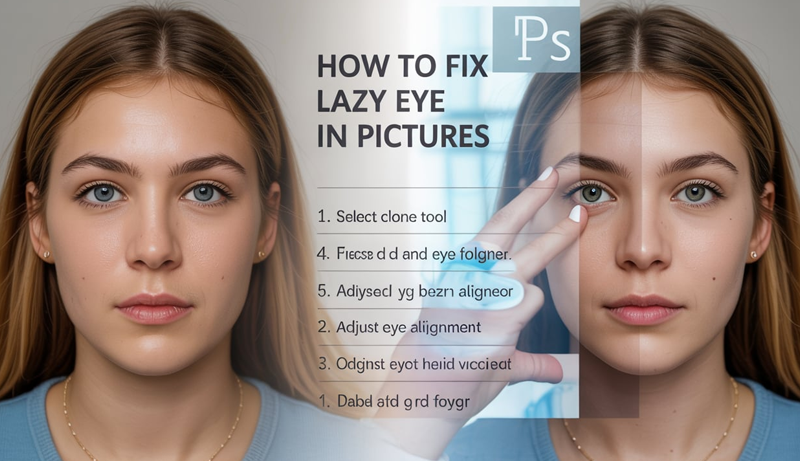
How to Fix Lazy Eye in Pictures
Photos often reveal small details about our appearance that we don’t notice in everyday life. One of those details can be a lazy eye, which may become more noticeable in pictures due to lighting, angles, or facial positioning. For many people, seeing this in photos can affect confidence and raise questions about what can be done to improve it.
A lazy eye in pictures doesn’t always reflect how your eyes look in real life. Camera lenses, head tilt, and even facial expressions can exaggerate alignment issues. Understanding why this happens is the first step toward addressing it and feeling more comfortable with how you appear in photos.
This guide focuses on practical and realistic ways to improve eye appearance in images. It explores visual techniques, simple habits, and corrective options that help reduce the appearance of eye misalignment when captured on camera.
By learning how to fix lazy eye in pictures, you can gain more control over how you look in photos and feel more confident sharing them. Small adjustments can make a noticeable difference, and awareness is often the key to better results.
How to Fix Lazy Eye in Pictures?
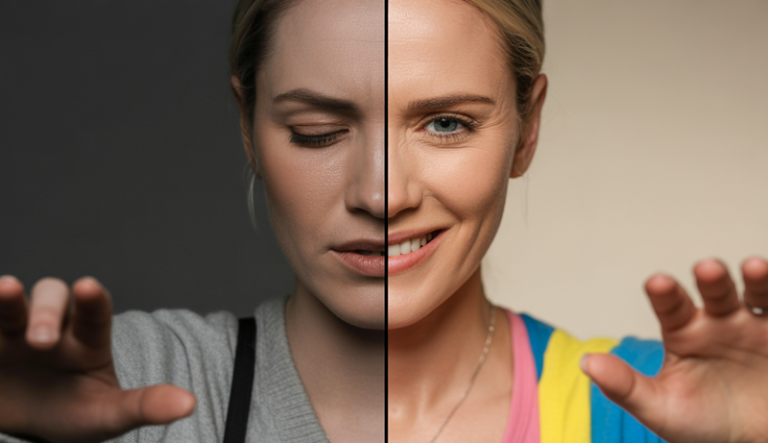
A lazy eye can look more noticeable in pictures than it does in real life, mainly because cameras freeze a single moment. Factors like lens distortion, uneven lighting, or slight head turns can exaggerate eye alignment. The first step to improving this is awareness—knowing which angles highlight your best features and which ones tend to emphasize the issue.
One effective approach is adjusting your head position. Turning your face slightly instead of facing the camera straight on can help balance eye alignment. Keeping your chin level and avoiding extreme tilts also reduces the chance of one eye appearing off-center. These small posture changes often make a visible difference in photos.
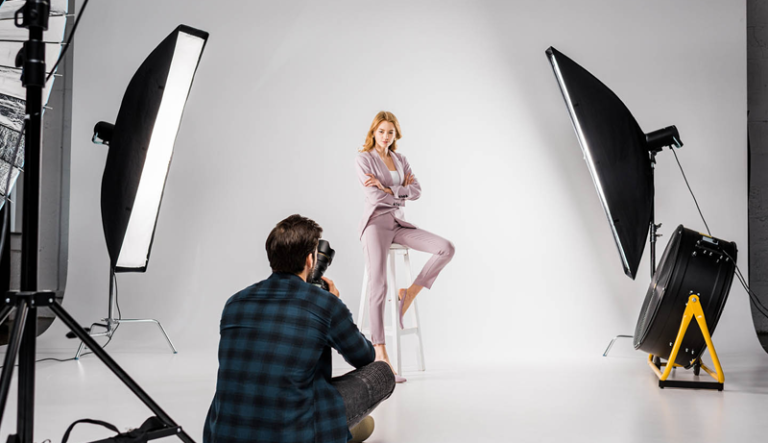
Lighting plays a major role as well. Soft, even lighting minimizes shadows that can draw attention to eye misalignment. Natural light from the front or slightly to the side works best. Harsh overhead or side lighting can make one eye look smaller or less focused, so controlling light sources is key.
Eye focus is another important detail. Looking directly at the camera lens—not the screen—helps both eyes appear more aligned. Practicing this before taking photos can train your eyes to work together more naturally in front of the camera.
For those looking for longer-term improvement, eye exercises and professional treatments can help strengthen eye coordination over time. While results vary, consistency often leads to better control.
Ultimately, learning how to fix lazy eye in pictures is about combining technique, practice, and confidence. With the right adjustments, photos can better reflect how you truly look and feel.
What Is a Lazy Eye?
A lazy eye, medically known as amblyopia, is a condition where one eye does not see as clearly as the other, even when glasses or contact lenses are used. This happens because the brain begins to favor one eye over the other, reducing visual processing from the weaker eye over time.
The condition usually develops during early childhood, when the visual system is still forming. Common causes include crossed or misaligned eyes, significant differences in vision strength between the two eyes, or conditions that block vision such as drooping eyelids. When one eye sends a clearer image, the brain learns to rely on it more.
Although it often starts in childhood, the effects of a lazy eye can continue into adulthood if not addressed early. Many adults are unaware they have it until they notice issues in photos, depth perception, or eye fatigue during close work.
A lazy eye does not always mean the eye visibly turns inward or outward. In many cases, both eyes may appear straight, but vision in one eye is still weaker. This makes the condition harder to detect without a proper eye exam.
While amblyopia primarily affects vision, it can also influence appearance in photographs. The weaker eye may drift slightly or lose focus when a camera captures a still moment.
Understanding what a lazy eye is helps explain why it can stand out in pictures and why certain techniques or treatments can improve both vision and visual appearance over time.
How to Fix Lazy Eye in Pictures: Treatment Methods
Fixing the appearance of a lazy eye in pictures often requires more than camera tricks. Treatment methods focus on improving eye coordination, strengthening the weaker eye, and training the brain to use both eyes together. When these methods are explained clearly, they help people understand how real improvements happen over time. The following sections break down the most common treatments and how they contribute to better eye alignment and appearance in photos.
Eye Patching (Photo Guide)
Eye patching is one of the most widely used treatments for lazy eye, particularly in children. This method works by covering the stronger eye so the weaker eye is forced to work harder. Over time, this helps strengthen the lazy eye and improves the brain’s ability to process visual input from it.
Correct placement of the patch is essential for results. The patch must fully block vision from the dominant eye without gaps or slipping. When applied consistently, patching encourages better control and focus in the weaker eye, which can gradually reduce misalignment visible in pictures.
Patching is often incorporated into daily routines such as reading, playing, or homework. Making it part of normal activities increases compliance and effectiveness. Consistency matters more than duration alone.
As treatment progresses, changes may become noticeable in photographs. While improvements are gradual, many people see better eye positioning and focus over time, which directly improves how the eyes appear in still images.
Corrective Glasses (Visual Examples)
Corrective glasses are commonly prescribed when a lazy eye is caused by differences in vision strength between the eyes. When one eye sees more clearly, the brain favors it, leading to weaker use of the other eye. Glasses help balance vision and reduce this dominance.
For some individuals, glasses alone significantly improve the appearance of a lazy eye in pictures. By correcting refractive errors, both eyes can focus together more effectively, reducing drifting or unfocused looks in photos.
Proper fit is critical. Glasses must sit straight and align correctly with the eyes. Poorly fitted frames can exaggerate eye misalignment in pictures rather than improve it.
With consistent use, corrective glasses may lead to noticeable improvements in facial symmetry. While they are not a complete solution for every case, they often play a key role in improving eye alignment seen in photographs.
Eye Exercises (Illustrated)
Eye exercises aim to strengthen coordination and focus between both eyes. These exercises train the eyes to work together rather than independently, which can reduce the appearance of a lazy eye over time.
Common exercises include eye tracking, focus shifting between near and far objects, and controlled eye movements. Performing these exercises correctly is essential for effectiveness, and consistency is more important than intensity.
Regular practice helps improve control of eye movement, making it easier for both eyes to align during a still moment like a photograph. Over time, this improved coordination becomes more natural.
Although exercises do not produce instant visual changes, gradual improvement often appears in pictures as better eye focus and reduced drifting, especially when exercises are done daily.
Vision Therapy (Clinic Images)
Vision therapy is a structured program supervised by eye care professionals. It focuses on retraining the brain and eyes to work together more efficiently through guided activities and exercises.
Therapy sessions involve hands-on techniques that improve eye tracking, depth perception, and focus control. Progress is monitored closely, and exercises are adjusted based on individual response.
Vision therapy is especially effective for individuals who do not respond fully to glasses or patching alone. It addresses the neurological aspect of lazy eye, not just muscle alignment.
As eye coordination improves, changes often become visible in photographs. Better control leads to more consistent eye positioning, improving how the eyes appear in both casual and posed pictures.
Surgery (Before & After Photos)
Surgery is typically recommended when eye misalignment cannot be corrected through non-invasive treatments. The goal of surgery is to adjust the eye muscles to improve alignment, not to directly improve vision.
Results are often most noticeable in appearance. Straighter eye alignment can significantly improve how the eyes look in pictures, creating better facial balance and symmetry.
Recovery varies, and early results may include temporary redness or swelling. Over time, the eyes settle into their new position, leading to more natural-looking alignment.
For individuals primarily concerned about how a lazy eye appears in photographs, surgery can offer visible improvement when other methods are not sufficient.
Can Lazy Eye Be Fixed?
A lazy eye, also known as amblyopia, can often be improved, and in many cases effectively treated, especially when addressed early. The condition develops when the brain favors one eye over the other, leading to reduced vision or control in the weaker eye. Treatment focuses on retraining the brain to use both eyes together rather than relying on just one.
Age plays an important role, but it does not completely limit improvement. Children generally respond faster to treatment because their visual systems are still developing. However, studies and clinical experience show that adults can also see meaningful progress with the right approach and consistency.
The success of treatment depends on the underlying cause of the lazy eye. Vision imbalance, eye misalignment, or focusing problems each require different strategies. Corrective glasses, patching, eye exercises, or structured vision therapy are often used alone or in combination.
Consistency is a key factor in whether a lazy eye can be fixed. Treatments require regular practice and follow-through to produce results. Skipping sessions or stopping too early can limit improvement, even when the method itself is effective.
While some people achieve full visual correction, others experience partial improvement. Even when vision does not fully equalize, better eye coordination and alignment often occur, which can significantly improve daily function and appearance in pictures.
Overall, a lazy eye can often be improved, and in many cases successfully managed, with early diagnosis, appropriate treatment, and long-term commitment.
Types of Lazy Eye
Lazy eye, clinically known as amblyopia, is not a single condition but a group of vision disorders that develop for different reasons. Each type affects how the brain and eyes work together and can influence both vision quality and eye alignment. Understanding the different types of lazy eye helps explain why symptoms vary and why treatment approaches differ from one person to another.
Strabismic Lazy Eye (Strabismus-Related)
Strabismic lazy eye occurs when the eyes are misaligned, meaning they do not point in the same direction. One eye may turn inward, outward, upward, or downward while the other focuses normally. Because the brain receives two different images, it begins to ignore input from the misaligned eye to avoid double vision.
Over time, this suppression weakens vision in the affected eye. The brain essentially “turns off” the image from that eye, even though the eye itself may be physically healthy. This type of lazy eye is often noticeable, as the eye turn can be seen clearly in everyday interactions and photographs.
Strabismic amblyopia commonly develops in early childhood, when the visual system is still forming. If left untreated, the brain continues favoring the straight eye, reinforcing the imbalance. This can lead to poor depth perception and reduced binocular vision.
In pictures, strabismic lazy eye is often more visible due to frozen moments that capture the eye turning. Lighting and camera angles can exaggerate the misalignment, making it appear more pronounced than in real life.
Treatment typically focuses on improving eye alignment and encouraging both eyes to work together. Addressing this type early often leads to better visual and cosmetic outcomes.
Refractive Lazy Eye (Unequal Vision Strength)
Refractive lazy eye develops when there is a significant difference in vision strength between the two eyes. One eye may be more farsighted, nearsighted, or have stronger astigmatism than the other. Because one eye provides a clearer image, the brain naturally relies on it more.
Unlike strabismic lazy eye, the eyes may appear perfectly straight. This makes refractive amblyopia harder to detect without a comprehensive eye exam. Parents and adults may not notice any obvious signs until vision problems or photo-related concerns arise.
Over time, the brain suppresses the blurrier image from the weaker eye. Even with corrective lenses, the brain may continue favoring the stronger eye if the condition has been present for too long.
In photographs, refractive lazy eye may show up as one eye appearing unfocused, smaller, or less engaged. The difference is subtle but can affect facial symmetry in still images.
Treatment usually involves corrective glasses to balance vision between both eyes. Additional therapies may be used to strengthen the weaker eye and retrain the brain to process images equally.
Deprivation Lazy Eye (Blocked Vision)
Deprivation lazy eye is the least common but most severe form. It occurs when something physically blocks light from entering the eye during early development. Common causes include congenital cataracts, drooping eyelids (ptosis), or other obstructions that interfere with clear vision.
Because the brain does not receive adequate visual input from the affected eye, it never fully learns to process images from it. This leads to rapid vision loss if not treated early, often within the first few years of life.
Unlike other types, deprivation amblyopia can develop even when both eyes are properly aligned. The issue lies in the lack of visual stimulation rather than eye coordination or focus strength.
In pictures, this type may appear as a drooping eyelid or cloudy pupil rather than obvious eye turning. The visual difference may be subtle, but the underlying vision loss is often significant.
Treatment focuses on removing the obstruction as early as possible, followed by therapies to stimulate the weaker eye. Early intervention is critical for improving long-term outcomes.
Mixed Lazy Eye (Combination Causes)
Mixed lazy eye occurs when more than one cause is present at the same time. A child may have eye misalignment along with unequal vision strength, or another combination of contributing factors. This makes the condition more complex to diagnose and treat.
The brain receives conflicting signals from both eyes in multiple ways, reinforcing suppression of the weaker eye. As a result, vision loss and coordination problems can be more pronounced than in single-cause cases.
Mixed amblyopia often requires a multi-step treatment approach. Corrective lenses may be used first, followed by patching, eye exercises, or structured vision therapy. In some cases, surgical intervention may also be considered.
In photographs, mixed lazy eye can appear inconsistent. The eye may look aligned in one photo and misaligned in another, depending on focus, fatigue, or lighting. This inconsistency often causes confusion for individuals trying to understand the issue.
Because multiple factors are involved, treatment progress may be slower. However, addressing each contributing cause systematically can lead to meaningful improvements in both vision and appearance.
How Long Does It Take to Fix Lazy Eye?
The time it takes to fix a lazy eye varies widely from person to person. There is no single timeline that applies to everyone because progress depends on factors such as age, type of lazy eye, severity, and how early treatment begins. Some people notice improvement within months, while others require longer-term management.
Children often respond more quickly to treatment because their visual systems are still developing. In many cases, noticeable improvement can occur within a few weeks to a few months after starting treatment. Early diagnosis allows the brain to adapt more easily, speeding up results.
For older children and adults, progress usually takes longer. While improvement is still possible, the brain requires more time and consistent effort to retrain visual processing. Treatments may extend over several months or even years, depending on how the eyes respond.
The type of treatment also affects the timeline. Corrective glasses may show results relatively quickly, while patching, eye exercises, or vision therapy often require sustained daily practice. In cases where surgery is involved, alignment changes may be immediate, but full recovery and visual adjustment take additional time.
Consistency plays a major role in how long treatment takes. Skipping therapy sessions or not wearing prescribed lenses can significantly delay progress. Regular follow-ups help ensure the treatment plan stays effective.
Overall, fixing a lazy eye is a gradual process. Patience, commitment, and adherence to treatment are essential for achieving lasting improvement.
Common Myths About Fixing Lazy Eye
One common myth about fixing a lazy eye is that it cannot be treated after childhood. While early treatment is highly beneficial, research and clinical experience show that adults can still see improvement. The brain remains capable of adapting, especially with consistent therapy and modern treatment methods.
Another widespread misconception is that glasses alone will always fix a lazy eye. While corrective lenses are essential in many cases, they do not address all underlying causes. Lazy eye often involves how the brain processes visual input, which may require additional therapies beyond vision correction.
Many people believe a lazy eye is only a cosmetic issue. In reality, it primarily affects vision, depth perception, and eye coordination. The visible appearance is often just one symptom of a deeper visual imbalance that can impact daily activities.
There is also a myth that surgery is the fastest or best solution for everyone. Surgery can improve eye alignment, but it does not retrain the brain or fully restore vision on its own. Most cases still require follow-up therapy for long-term success.
Some assume that patching or exercises work instantly. In truth, progress is gradual and requires patience. Skipping sessions or stopping early can limit results, even when the treatment is effective.
Understanding these myths helps set realistic expectations. Fixing a lazy eye is usually possible, but it takes time, consistency, and the right combination of treatments tailored to the individual.
People Also Asked
Can A Lazy Eye Be Fixed In Pictures Without Medical Treatment?
You can often improve how a lazy eye appears in pictures without medical treatment by using camera techniques and awareness. Adjusting your head angle, keeping your chin level, and facing soft, even lighting can reduce the appearance of misalignment. Looking directly at the camera lens instead of the screen helps both eyes appear more aligned. While these methods do not treat the condition itself, they can significantly improve how your eyes look in photos.
Why Does A Lazy Eye Look Worse In Photos Than In Real Life?
A lazy eye can appear worse in pictures because a camera captures a single frozen moment. Lighting, lens distortion, and slight head tilts can exaggerate eye alignment issues. When you blink or shift focus naturally in real life, the difference is less noticeable. In photos, however, that brief misalignment becomes more obvious, making the lazy eye stand out more than it usually does.
Can Eye Exercises Help Fix A Lazy Eye In Pictures?
Eye exercises can help improve eye coordination over time, which may lead to better eye alignment in pictures. When you consistently practice focus training and eye-tracking exercises, your eyes learn to work together more effectively. This improved control often shows up in photos as better eye focus and reduced drifting, especially when exercises are done regularly.
Do Glasses Improve The Appearance Of A Lazy Eye In Pictures?
Glasses can improve the appearance of a lazy eye in pictures when the condition is caused by unequal vision strength. By balancing vision between both eyes, glasses help reduce dominance of the stronger eye. Properly fitted frames also play a role, as crooked glasses can make eye misalignment look worse in photos rather than better.
How Long Does It Take To See Improvement In Pictures?
The time it takes to see improvement in pictures varies. Some people notice changes within a few months of consistent treatment, while others require longer. Factors such as age, severity, and treatment type all affect the timeline. With regular practice and adherence to treatment, gradual improvement in photo appearance is common.
Is Surgery The Best Way To Fix A Lazy Eye In Pictures?
Surgery is not always the best or first option for fixing a lazy eye in pictures. It is usually recommended only when other treatments are not effective. Surgery can improve eye alignment, which may significantly enhance appearance in photos, but it does not correct vision on its own. Most people still need follow-up therapy for lasting results.
Conclusion
Improving the appearance of a lazy eye in photos is a realistic goal when you understand the reasons it stands out and take the right steps to address it. Small changes in posture, lighting, and camera focus can make an immediate difference, while consistent visual habits help create more natural-looking results over time.
Beyond photography techniques, long-term improvement often comes from treating the underlying causes. Glasses, eye exercises, vision therapy, or other guided treatments can improve coordination and alignment, which naturally translates into better-looking pictures. Progress may be gradual, but even subtle changes can noticeably improve facial balance in photos.
Learning how to fix lazy eye in pictures is ultimately about combining awareness, consistency, and confidence. With the right approach, your photos can better reflect how you truly look, helping you feel more comfortable and self-assured in front of the camera.