Why Do I Look So Fat in Pictures
Scrolling through photos can trigger an uncomfortable pause. A moment that felt light and confident in real life suddenly looks heavier on screen. Many people experience this disconnect and quietly wonder what changed between the mirror and the camera lens.
The truth is, photographs can exaggerate features in ways daily life never does. Angles, lighting, posture, and lenses all play subtle roles in shaping how a body appears. What feels like a personal flaw often comes down to technical details outside anyone’s control.
This confusion is why so many people search for answers to Why Do I Look So Fat in Pictures. The question is rarely about vanity. It usually reflects frustration, self-doubt, and the desire to understand why photos feel so unkind compared to lived reality.
Exploring this topic opens the door to clarity and self-compassion. Once the reasons behind distorted images become clear, the power of a single photo starts to fade. Understanding replaces shame, and confidence begins to return, one honest explanation at a time.
Why Do I Look So Fat in Pictures?
Photos often feel harsher than mirrors because cameras don’t see the way human eyes do. A camera freezes a single fraction of a second, flattening depth and exaggerating whatever is closest to the lens. This can make faces look wider, bodies look heavier, and proportions feel unfamiliar, even when nothing has changed in real life.
Lens choice plays a bigger role than most people realize. Phone cameras commonly use wide-angle lenses, which subtly stretch objects near the edges of the frame. When your body or face is closer to the camera, it can appear larger than it actually is. This distortion isn’t about weight—it’s about physics.
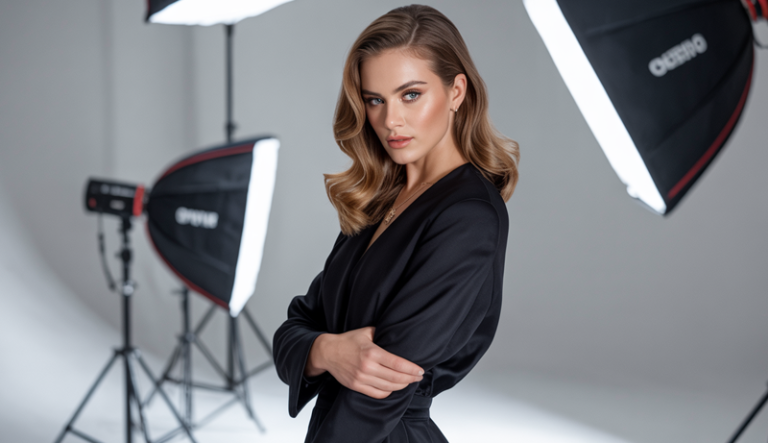
Lighting also has a powerful effect. Overhead or frontal lighting can remove natural shadows that normally define shape, making areas look flatter and broader. Poor lighting can hide contours, while harsh lighting can emphasize areas you’re already self-conscious about, changing how your body reads in a still image.
Posture and timing matter too. Slouching, mid-movement shots, or captured breaths can add visual bulk that disappears the moment after the shutter clicks. Cameras don’t wait for your best angle; they capture whatever happens to be there.
Ultimately, asking “Why Do I Look So Fat in Pictures” is often less about appearance and more about perception. Photos are interpretations, not truths. Understanding how cameras work helps separate self-image from technical illusion and makes it easier to view photos with less judgment and more perspective.
Is It Just Me—or Do Cameras Really Make You Look Bigger?
It’s a thought many people have but rarely say out loud. You look fine in the mirror, feel confident walking out the door, and then see a photo later that feels completely disconnected from reality. That moment can make it feel personal, as though the camera is exposing something you somehow missed.
In reality, cameras really do make people look bigger—and there are clear reasons why. Cameras flatten three-dimensional bodies into two-dimensional images. Without natural depth, areas like shoulders, hips, and faces can appear wider than they look in motion or real life.
Distance from the camera matters more than most people realize. When a camera is too close, especially phone cameras, it enlarges whatever is nearest to the lens. This is why group photos often make people on the edges look stretched, while the person in the center looks more proportional.
Angles also play a quiet but powerful role. Photos taken from below tend to emphasize the lower body and torso, while straight-on shots can remove natural curves created by posture and movement. A split-second freeze doesn’t capture how a body actually carries itself.
There’s also the emotional factor. People are far more critical of still images than reflections or videos. A photo feels permanent, inviting comparison and scrutiny that doesn’t exist in everyday moments.
So no—it’s not just you. Cameras interpret, distort, and simplify reality. Understanding that helps separate self-worth from a single frozen frame that never tells the full story.
Camera Lens Distortion (The Biggest Culprit)
Camera lens distortion is one of the most overlooked reasons photos can feel unflattering or unfamiliar. It quietly reshapes proportions without warning, making bodies and faces appear wider, shorter, or heavier than they are in real life. This distortion isn’t about weight gain or body changes—it’s a technical side effect of how lenses capture space, distance, and depth in a single frozen frame.
How Wide-Angle Lenses Change Body Proportions
Most smartphones and casual cameras rely on wide-angle lenses because they capture more of a scene in a limited space. While convenient, these lenses stretch objects that are closer to the camera and compress those farther away. When a face, torso, or limb is even slightly closer to the lens, it can appear noticeably larger than the rest of the body.
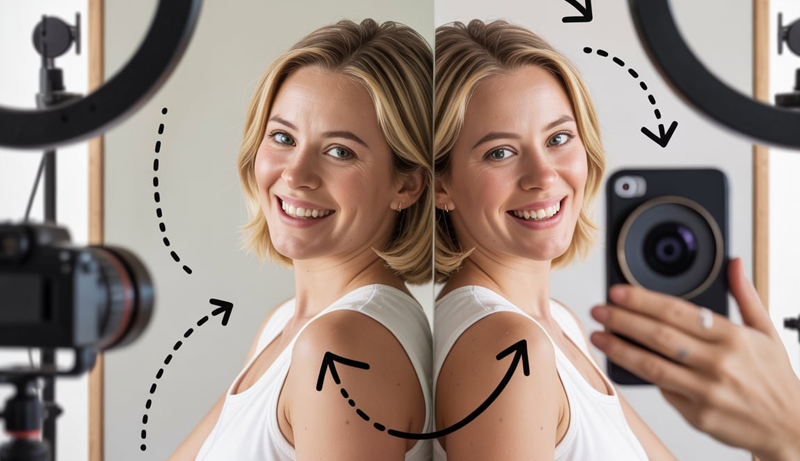
This effect is especially visible in selfies and close-up shots. Facial features such as cheeks, jawlines, and noses often look broader because they sit closer to the lens than the ears or shoulders. The same principle applies to the body—shoulders can appear wider, midsections fuller, and legs shorter depending on positioning. None of this reflects actual size or shape; it’s simply geometry at work.
What makes this distortion confusing is how subtle it feels in the moment. The camera doesn’t announce the change, and the image still looks “real,” even though proportions have been altered. Over time, repeated exposure to distorted images can create a false perception of how one truly looks, reinforcing unnecessary self-criticism rooted in lens mechanics rather than reality.
Distance From the Camera Matters More Than You Think
One of the strongest influences on lens distortion is distance. The closer a subject is to the camera, the more exaggerated their proportions become. Even a difference of a few inches can dramatically change how a body appears in a photograph. This is why professional photographers often step back and zoom in rather than shooting up close.
When someone stands too near the lens, the center of the body becomes visually dominant. Torsos can look thicker, faces rounder, and limbs uneven in size. In group photos, this effect is amplified—people closest to the camera appear larger, while those farther away seem slimmer or smaller, even if everyone is similar in size.
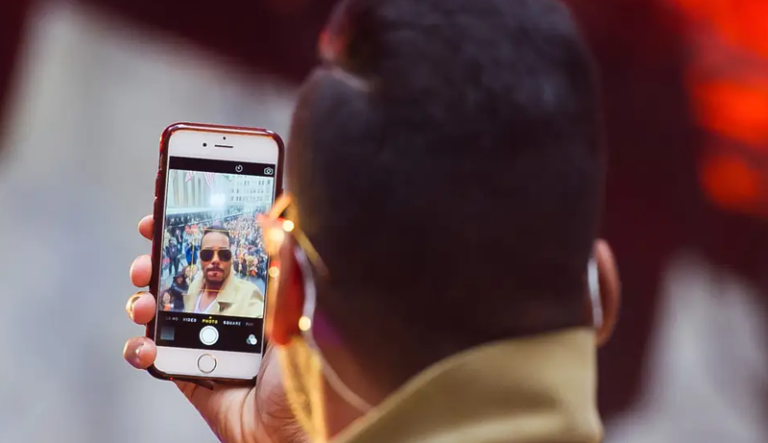
Smartphone cameras make this issue worse because they encourage closeness. Arm-length selfies, cramped indoor photos, and casual snapshots rarely allow for ideal distance. The lens does what it’s designed to do: capture everything quickly. Unfortunately, that convenience sacrifices accuracy in proportions.
Understanding distance helps explain why mirrors and photos feel so different. Mirrors reflect from a consistent distance, while cameras constantly change perspective. The body hasn’t changed—only the spatial relationship between the lens and the subject has shifted.
Why Phone Cameras Are Especially Misleading
Phone cameras prioritize practicality, not realism. Their default lenses are designed to fit landscapes, rooms, and groups into small frames, which requires wide-angle optics. While this works well for scenery, it’s far less forgiving for human proportions, especially in close-range shots.
Unlike professional cameras, phone cameras automatically adjust focal length, cropping, and processing. These adjustments can subtly widen shapes or smooth contours in ways that feel unnatural. Combined with wide-angle distortion, the result can be an image that feels heavier or broader than expected.
Another issue is lens placement. Front-facing cameras are often positioned slightly above or below eye level, encouraging angles that exaggerate certain areas of the body. This positioning can make shoulders slope forward, chins appear fuller, or midsections look more prominent—all without any change in actual body composition.
Because phones are used casually and frequently, people see more distorted images of themselves than accurate ones. Over time, this repetition can override memory and mirror-based perception. The camera becomes an unreliable narrator, quietly reshaping self-image through technical shortcuts rather than truth.
Lighting Makes or Breaks a Photo
Lighting has a powerful influence on how bodies appear in photos, often more than the camera itself. It shapes shadows, highlights curves, and defines depth. When lighting is unflattering or poorly positioned, it can flatten features and exaggerate size. Understanding how light behaves explains why the same person can look completely different from one photo to the next.
Flat Lighting Removes Natural Shape and Definition
Flat lighting occurs when light hits the subject evenly from the front, leaving little to no shadow. While this may seem ideal, it actually removes the natural contours that give the body definition. Without shadows, areas blend together visually, making the face and body appear broader and less structured.
This type of lighting is common with phone flashes, indoor overhead lights, and direct sunlight positioned straight in front of the subject. Facial features such as cheekbones and jawlines lose contrast, while torsos and arms appear smoother but wider. The camera interprets this lack of contrast as extra volume, even though nothing has physically changed.
Flat lighting also affects clothing. Textures and folds that normally create slimming lines disappear, making outfits look heavier or shapeless. What feels like a “bad photo day” is often just a lighting issue, not a body issue.
Because the human eye naturally adjusts to light and shadow in real time, this flattening effect goes unnoticed in daily life. Photos freeze that imbalance, turning a momentary lighting flaw into a permanent-looking distortion that feels personal when it’s purely technical.
Overhead Lighting Creates Unflattering Shadows
Overhead lighting is one of the most common and most misleading lighting setups. Found in offices, gyms, bathrooms, and event venues, it casts shadows straight downward. This creates darker areas under the eyes, chin, arms, and torso, visually adding weight and harshness.
When light comes from above, it emphasizes gravity. Shadows collect in natural folds and curves, making them appear deeper and more pronounced. The midsection can look heavier, necks shorter, and shoulders rounder. Even fit or lean bodies can appear bulkier under this type of lighting.
Cameras amplify this effect because they capture contrast more aggressively than the human eye. What looks normal in person becomes exaggerated in a photo. The camera doesn’t balance shadows the way vision does, so darker areas dominate the image.
Overhead lighting also removes the subtle highlights that define posture and shape. Without side or front light to balance it out, the body loses dimension. The result is an image that feels heavier and less dynamic, despite reflecting a completely normal moment in real life.
Backlighting and Harsh Contrast Can Alter Perception
Backlighting happens when the main light source is behind the subject. While it can look artistic, it often confuses camera sensors. The camera compensates by darkening the subject, which removes detail and compresses visible shape into a heavier silhouette.
When details disappear, the body becomes a solid form rather than a defined structure. Arms, waistlines, and facial features blur together, making the overall shape appear larger. This effect is especially noticeable in outdoor photos taken at sunrise, sunset, or near bright windows.
Harsh contrast also plays a role. Strong light paired with deep shadow creates visual imbalance. Bright areas pull attention, while shadowed areas feel heavier and more dominant. Cameras struggle to capture both extremes accurately, often favoring one at the expense of the other.
In real life, movement and depth balance these extremes. In photos, that balance disappears. The result is an image shaped by lighting extremes rather than reality, reinforcing the idea that lighting alone can completely change how a body is perceived without altering the body itself.
Angles That Work Against You
Camera angles quietly influence how bodies appear in photos, often without people realizing it in the moment. A slight shift in height or direction can change proportions, widen certain areas, or flatten natural curves. When an angle works against you, it creates a distorted version of reality that feels unfamiliar and unfair despite being entirely technical.
Low Angles Emphasize Width and Volume
Photos taken from a low angle—where the camera sits below eye level—tend to exaggerate size. This angle pushes the lower body and torso closer to the lens, making them appear larger and more dominant in the frame. Legs can look shorter, hips wider, and midsections heavier due to the upward perspective.
Low angles also alter posture. People often lean back slightly to compensate, which can compress the torso and create visual folds that don’t exist when standing naturally. The camera freezes this moment, turning a temporary shift into a lasting image that feels unflattering.
This effect is common in casual photos taken by friends, group shots where the photographer is seated, or phone photos held too low. Even fit or lean individuals can appear heavier simply because the camera is positioned below their natural line of sight.
The human eye rarely views bodies from this perspective in daily interactions. When it happens in photos, the unfamiliar angle can trigger self-criticism rooted in distortion rather than reality.
Straight-On Angles Flatten Natural Curves
While straight-on angles feel neutral, they often remove the depth and dimension that give bodies their natural shape. When a camera faces the body directly at chest or waist height, it compresses curves and blends features together, making the overall shape appear broader.
This angle minimizes shadow and contour, especially when paired with flat lighting. Waistlines lose definition, shoulders look wider, and posture appears stiffer. Movement and natural stance—which normally create slimming lines—are stripped away in a static, head-on frame.
Straight-on angles are common in posed photos, ID-style shots, or moments where someone freezes for the camera. The body becomes a flat surface rather than a dynamic form, and the camera records width more prominently than depth.
In real life, bodies are constantly shifting, turning, and adjusting. Photos taken straight-on ignore that fluidity. The result is an image shaped more by geometry than by how a person truly looks or moves in everyday moments.
Clothing Choices That Photograph Poorly
Clothing can dramatically influence how a body appears in photos, even when it looks great in real life. Certain fabrics, cuts, and patterns interact poorly with cameras, creating shapes and shadows that don’t reflect how the outfit actually fits. What feels comfortable and flattering in the mirror can translate very differently once frozen in a photograph.
Stiff or bulky fabrics are a common issue. Materials that lack movement tend to hold their shape, which can add visual volume in photos. Thick knits, heavy cottons, and structured garments may create boxy outlines, especially when the body is seated or slightly turned. The camera captures the fabric’s shape, not how it settles in motion.
Horizontal stripes and bold patterns can also work against the lens. Cameras flatten depth, making patterns appear wider than intended. Stripes stretch across the frame, drawing attention sideways rather than vertically. Busy prints can blur together, removing definition and making areas look larger or heavier.
Poor fit plays a role as well. Clothes that are too tight can create harsh lines and shadows, while oversized pieces may hide natural shape altogether. In photos, both extremes exaggerate size rather than balance proportions.
Lighting and color further complicate things. Shiny fabrics reflect light unevenly, highlighting areas unexpectedly. Light colors under bright lighting can expand visually, while dark colors in low light can lose contour. The camera responds to contrast, not comfort.
Ultimately, clothing that photographs poorly isn’t a reflection of your body. It’s a reminder that cameras interpret fabric and shape differently than real life ever does.
The Psychology Factor: Why You’re Your Own Worst Critic
Seeing yourself in photos triggers a very different response than seeing anyone else. Familiarity breeds scrutiny, and your brain instantly begins comparing the image to an internal version of how you believe you look. This gap between expectation and reality often creates discomfort, even when the photo itself is completely normal.
The mind naturally focuses on perceived flaws. Years of self-awareness train you to notice small details others would never register. In photos, this tendency intensifies because the image is still, allowing unlimited time for inspection. What was once a fleeting thought becomes a fixed point of judgment.
Photos also invite comparison. Whether consciously or not, people measure their appearance against past images, social media standards, or edited ideals. This comparison creates a distorted baseline, making natural bodies feel inadequate when placed next to curated or filtered versions of reality.
Another factor is emotional memory. A single unflattering photo can outweigh dozens of neutral or positive ones. The brain assigns more weight to negative experiences, reinforcing the belief that the camera “always” looks bad, even when evidence suggests otherwise.
There’s also the loss of control. Mirrors allow movement, adjustment, and choice. Photos remove that agency. The moment is captured without consent from posture, expression, or timing, making the result feel unfair.
Being your own harshest critic isn’t vanity—it’s psychology. Understanding this helps separate self-worth from a frozen image that never reflects the full, living version of you.
Are You Actually Gaining Weight—or Is It an Illusion?
A sudden string of unflattering photos can spark an immediate fear that something has changed. When images start looking heavier than expected, the mind jumps to weight gain as the explanation. This reaction feels logical, but it’s often misleading.
Photos capture moments, not trends. A single angle, outfit, or lighting setup can create the illusion of added weight that disappears in different conditions. When these images are viewed in isolation, they can feel like proof, even though they represent nothing more than a split second.
The brain is also wired to search for patterns. Seeing multiple similar photos taken with the same phone, lighting, or angle can reinforce the idea that the body has changed. In reality, the same technical distortions are simply repeating themselves.
Daily weight fluctuations further complicate perception. Water retention, bloating, posture, and time of day can subtly affect how the body appears. Cameras exaggerate these minor changes, turning temporary states into permanent-looking visuals.
Social media adds another layer. Filtered and curated images reset expectations, making natural bodies feel unfamiliar or “larger” by comparison. When reality is measured against edited standards, illusion becomes easy to mistake for truth.
Questioning whether weight gain is real or imagined is understandable. More often than not, the camera is amplifying visual distortions, not revealing hidden changes.
How to Look Better in Photos (Without Changing Your Body)
Looking better in photos has far less to do with altering your body and far more to do with understanding how cameras interpret what they see. Small adjustments in positioning, environment, and awareness can dramatically change how a photo turns out. These changes work with the camera instead of against it, allowing your real appearance to come through more accurately.
Use Distance and Lens Awareness to Your Advantage
One of the most effective ways to improve photos is by increasing the distance between you and the camera. Standing farther back reduces lens distortion, especially with phone cameras that rely on wide-angle lenses. When the camera is too close, it exaggerates whatever is nearest to the lens, making faces and bodies appear wider.
Stepping back allows proportions to balance out. If possible, ask the photographer to move back and zoom in slightly rather than standing close. This compresses the image in a more natural way, similar to how the human eye perceives depth. For selfies, extending the arm fully or using a timer and stepping away can make a noticeable difference.
Awareness of lens type also helps. Front-facing phone cameras often distort more than rear cameras. Using the rear camera with a timer provides a truer representation of your shape. These simple adjustments don’t change your body—they change how the camera translates it.
Work With Light Instead of Fighting It
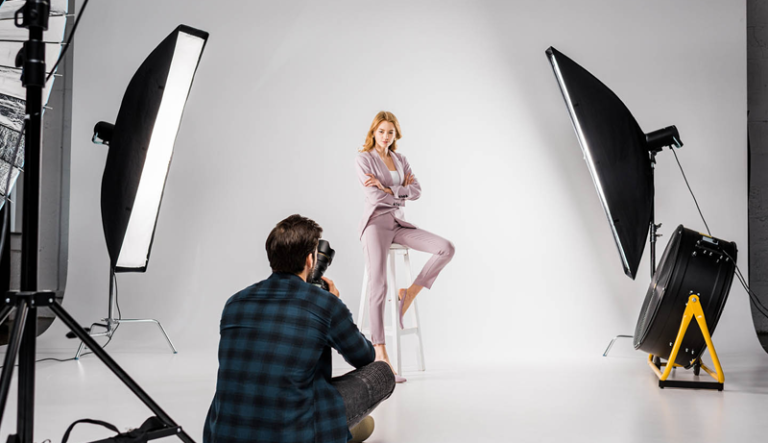
Lighting can instantly improve or ruin a photo. Soft, directional light creates gentle shadows that define shape and add depth. Natural light from windows, open shade outdoors, or light coming from a slight angle tends to be the most flattering.
Avoid overhead lighting whenever possible. Light coming from above casts shadows downward, making features appear heavier. Instead, position light slightly in front and to the side. This highlights contours without flattening them. Turning your body or face toward the light source rather than facing it straight on can also create natural definition.
Backlighting should be used carefully. When the brightest light is behind you, the camera darkens your body, removing detail. If backlighting is unavoidable, adjusting exposure or adding light to the front helps maintain balance. Light doesn’t need to be dramatic—it needs to be intentional.
Adjust Angles and Posture for Natural Shape
Subtle angle changes can dramatically affect how your body appears in photos. Turning slightly to the side rather than facing the camera straight on introduces depth and prevents flattening. Shifting weight to one leg creates natural lines and movement, making the body appear more dynamic.
Camera height matters as well. Positioning the camera slightly above eye level tends to be more forgiving than shooting from below. This angle elongates the body and reduces visual width. Keeping the camera at or just above chest height for full-body shots creates balanced proportions.
Posture also plays a key role. Standing tall without stiffness allows the body to settle naturally. Tension shows up clearly in photos, while relaxed alignment creates smoother lines. These adjustments aren’t about posing—they’re about letting the camera see the body as it exists in motion, not tension.
Choose Clothing and Expression With the Camera in Mind
Clothing that moves with the body tends to photograph better than stiff or bulky fabrics. Soft materials create natural folds and lines that add shape instead of volume. Solid colors and subtle textures translate more clearly than busy patterns, which can blur and widen visually.
Fit matters more than size. Clothes that skim the body without clinging or drowning it help maintain natural proportions. Layers should be intentional, as excess fabric can add visual weight. Small adjustments, like smoothing fabric or adjusting seams, can improve how clothes read on camera.
Expression is just as important. Forced smiles often look tense, while relaxed expressions feel more natural. Taking a breath, moving slightly, or allowing a moment between shots helps capture a version of you that feels real. The goal isn’t perfection—it’s accuracy.
What Social Media Doesn’t Tell You
Social media creates the illusion that photos are honest reflections of reality. Scrolling through endless images of confident poses and flawless bodies can quietly reset expectations about how people are “supposed” to look. What’s rarely acknowledged is how much work goes into making those images appear effortless.
Most social media photos are carefully selected from dozens, sometimes hundreds, of shots. Only the most flattering angles, lighting, and expressions survive. The discarded images—the ones that look awkward, unpolished, or completely normal—never see the light of day.
Editing plays a major role as well. Filters, smoothing tools, and subtle reshaping features are often applied so lightly they feel invisible. These adjustments don’t always look dramatic, but they change proportions just enough to influence perception and comparison.
Posing knowledge is another hidden factor. Many creators understand exactly how to stand, twist, or tilt to work with the camera. What looks natural is often practiced. Without that context, it’s easy to believe those bodies simply look perfect from every angle.
Timing matters too. Photos are often taken when lighting is ideal, posture is controlled, and confidence is high. Real life doesn’t operate on those conditions consistently.
Social media rarely shows the full picture. It shows a highlight reel shaped by selection, editing, and intention—never the countless ordinary moments that look just like everyone else.
Frequently Asked Questions (FAQs)
Why Do You Look Bigger In Photos Than In Real Life?
You often look bigger in photos because cameras flatten depth and exaggerate whatever is closest to the lens. Wide-angle lenses, especially on phones, stretch proportions and make faces or bodies appear wider. Lighting, posture, and frozen timing also remove natural movement and shadows that normally slim the body in real life. The photo reflects camera mechanics, not your actual size.
Do Phone Cameras Really Make You Look Fat?
Yes, phone cameras can make you look heavier, particularly when used up close. Most smartphones rely on wide-angle lenses that distort proportions at short distances. When your face or torso is closer to the lens, it appears larger than the rest of your body. This distortion is technical, not physical, and affects almost everyone.
Is It A Sign That You’re Gaining Weight?
Photos alone are not reliable indicators of weight gain. A single angle, outfit, or lighting setup can create the illusion of added weight. Daily factors like bloating, posture, or time of day also influence appearance. Real weight changes show consistency over time, not isolated images taken under different conditions.
Why Do You Look Fine In The Mirror But Not In Photos?
Mirrors show you a moving, three-dimensional reflection from a consistent distance. Photos freeze one moment, flatten depth, and remove movement. Your brain is also more familiar with your mirror image, so photos feel unfamiliar and harsher. The difference comes from perception and perspective, not from how you actually look.
Can Lighting And Angles Really Change Your Appearance That Much?
Lighting and angles can dramatically change how you appear in photos. Overhead or flat lighting removes natural shadows, making the body look wider. Low or straight-on angles flatten curves and exaggerate size. Small changes in light direction or camera height can significantly alter how your body is perceived.
Why Are You More Critical Of Your Own Photos Than Others?
You are more critical of your own photos because of psychological bias. You know your face and body intimately and focus on perceived flaws others don’t notice. Photos also feel permanent, inviting scrutiny. This self-criticism is rooted in familiarity and expectation, not objective reality or how others see you.
Final Takeaway
Looking heavier in photos can feel frustrating and personal, but the experience is far more common than most people realize. Cameras interpret reality differently than the human eye, freezing moments shaped by angles, lighting, distance, and timing. These technical factors often create distortions that have nothing to do with actual body changes.
Understanding the reasons behind unflattering images helps separate perception from truth. When you recognize how lenses flatten depth and how lighting alters shape, self-blame begins to fade. A single image loses its power when viewed through a more informed and compassionate lens.
The question of Why Do I Look So Fat in Pictures is ultimately about clarity, not criticism. Photos are interpretations, not measurements. When you stop letting a camera define your self-image, confidence returns to where it belongs—in how you live, move, and feel in real life.