Can a Landlord Put Cameras Outside the House?
Yes, you can install outdoor security cameras on your rental property, but you must respect tenant privacy and local laws. Place cameras only in common, public areas like driveways or parking lots, avoiding private spaces such as windows or balconies.
Notify tenants about camera locations and avoid recording audio unless all parties consent. Following these rules helps prevent legal issues and builds tenant trust.
Understanding detailed regulations and best practices will guide you in managing outdoor surveillance appropriately.
Key Takeaways
- Landlords can install outdoor security cameras in common or shared areas like driveways, parking lots, and building entrances.
- Cameras must avoid recording private tenant spaces such as windows, balconies, or inside rental units to respect privacy.
- Tenants should be notified in writing about camera locations and the purpose of surveillance for transparency.
- Audio recording via outdoor cameras generally requires tenant consent and must comply with state-specific consent laws.
- Footage must be securely stored with clear retention policies, and tenants should be informed about their rights regarding recorded data.
What Does the Law Say About Landlord Outdoor Security Cameras?
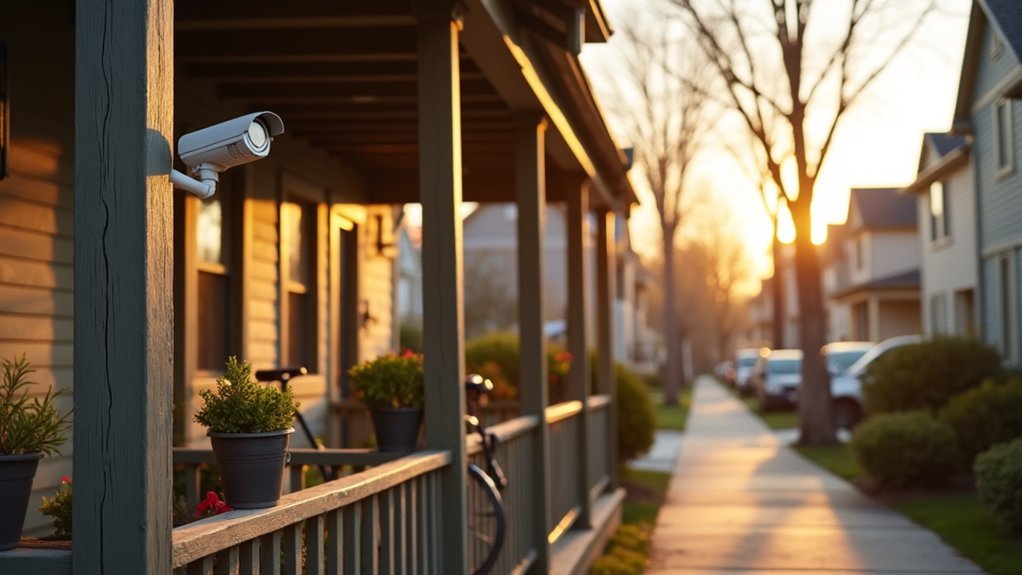
Although laws vary by state, landlords generally have the right to install outdoor security cameras on their property, especially in common areas like driveways, parking lots, and entrances.
These outdoor surveillance cameras are legal when positioned to respect tenants’ reasonable expectation of privacy. That means they mustn’t record private spaces such as windows or balconies.
Landlords are typically required to notify tenants about the installation, specifying camera locations and the purposes of recording. Transparency is essential to maintain trust and comply with legal standards.
While video recording in common areas is usually permitted, landlords should be aware of state laws regarding audio recording, as consent may be necessary.
Where Can Landlords Legally Place Outdoor Security Cameras?
When placing outdoor security cameras, landlords must guarantee they install them in areas like driveways, parking lots, and common spaces where tenants’ privacy isn’t compromised.
You can install security cameras in shared amenities such as gyms or pools, provided tenants are informed of their presence.
It’s vital to avoid angles that capture private spaces like windows or balconies, respecting tenant privacy.
Before installation, check local laws to verify legal compliance, as regulations may impose specific restrictions on camera placement.
Transparency is essential; notifying tenants about camera locations fosters trust and helps you comply with legal requirements.
What Types of Outdoor Security Cameras Are Allowed?
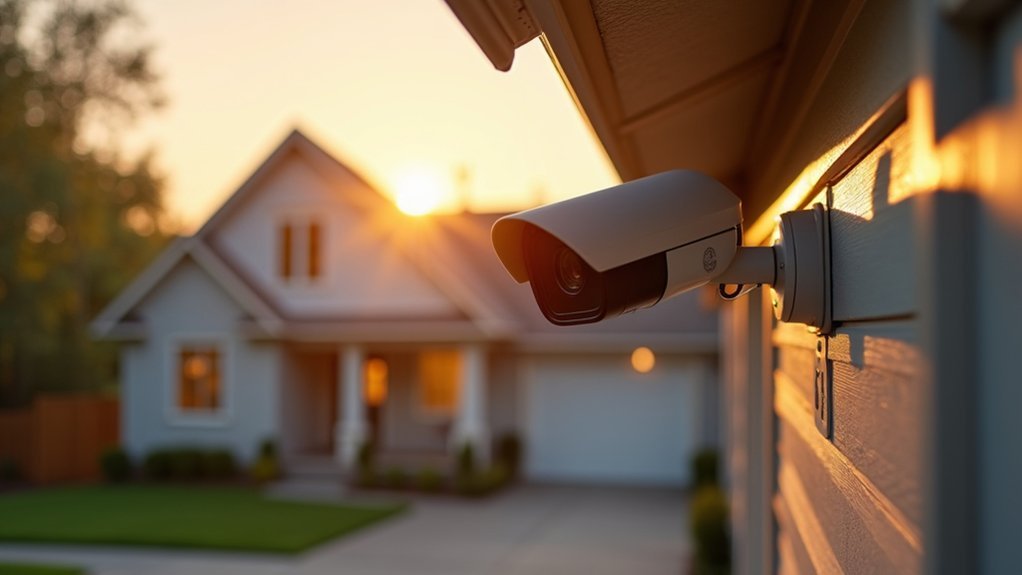
When it comes to outdoor security cameras, you can definitely install visible ones that keep an eye on your property, like driveways and entrances.
Just make sure they’re only monitoring your space. One important thing to remember is to avoid capturing audio unless you have the tenant’s consent, because that can get you into legal trouble.
It’s a good idea to focus cameras on common areas and keep them clearly visible. This way, you’re being transparent about the surveillance, which can help everyone feel more comfortable.
Plus, placing the cameras properly ensures they’re effective without invading anyone’s privacy. And of course, always check your local laws to make sure you’re following the rules.
Permitted Camera Types
Since landlords must respect tenants’ privacy, they can only install outdoor security cameras that monitor common areas like driveways, parking lots, and entrances where there’s no reasonable expectation of privacy.
When choosing permitted camera types, consider these guidelines:
Use visible security cameras focused on outdoor areas accessible to all tenants.
Avoid cameras facing private spaces such as windows or balconies to prevent invasion of privacy.
Guarantee cameras don’t record audio unless tenant consent is obtained, complying with surveillance laws.
Provide written notice to tenants detailing camera locations and purposes.
Position cameras to capture only the landlord’s property, excluding neighboring areas.
Audio Recording Restrictions
Although landlords have the right to install outdoor security cameras in common areas, they must adhere to strict audio recording restrictions to protect tenants’ privacy. Many states require consent from all parties before audio recording in outdoor areas.
Consequently, you should typically disable audio features unless local laws permit one-party consent. Cameras must not invade tenant privacy or capture audio without proper consent. Transparency is essential. Informing tenants about security cameras and their capabilities guarantees compliance with local laws.
| Aspect | Requirement | Notes |
|---|---|---|
| Audio Recording | Consent needed | Varies by state law |
| Outdoor Areas | Allowed in common spaces | No private balconies or windows |
| Privacy | Must respect reasonable expectation | No hidden microphones |
| Camera Use | Security purposes only | No spying |
| Tenant Notification | Mandatory in many states | Disclose recording capabilities |
Placement And Visibility
When installing outdoor security cameras, landlords must guarantee the devices remain visible and only monitor areas within their property boundaries.
You should verify security cameras in outdoor areas respect tenants’ reasonable expectation of privacy, avoiding views into private spaces like windows or balconies.
Maintain transparency by including camera locations and purposes in the lease agreement or written notice.
Consider these guidelines:
- Position cameras to cover driveways, parking lots, and common spaces only
- Avoid capturing neighboring private areas
- Inform tenants about surveillance in shared outdoor amenities
- Disable audio recording unless legally permitted
- Confirm camera visibility to deter unauthorized activity
Following these principles helps you balance effective surveillance with tenant privacy rights and legal compliance.
Can Landlords Record Audio With Outdoor Cameras?
You need to understand that recording audio with outdoor cameras involves strict legal limits and tenant consent requirements.
The rules can get a bit tricky because federal and state laws vary quite a bit. Some states require just one-party consent, while others have much stricter restrictions.
So, before you set up any audio recording, it’s really important to check your local regulations.
This way, you make sure you’re playing by the rules and not violating your tenants’ privacy rights. Better safe than sorry!
Audio Recording Legal Limits
Because audio recording laws vary by jurisdiction, landlords must exercise caution before enabling audio capture on outdoor cameras.
You should understand that audio recording legal limits are stricter than video surveillance on cameras outside. Wiretapping laws and privacy laws often prohibit recording conversations without consent, risking legal penalties.
Keep in mind:
- Many states require all-party consent for audio recording.
- Some jurisdictions allow one-party consent but may exclude external surveillance.
- Recording audio without consent can lead to civil lawsuits.
- Disabling audio features on outdoor cameras is usually safer.
- Compliance with local laws is essential to avoid violations.
Tenant Consent Requirements
Although landlords can install outdoor cameras without tenant consent in areas lacking a reasonable expectation of privacy, recording audio with these devices requires careful adherence to consent laws.
As a landlord, you must understand tenant consent requirements before enabling audio recording on cameras outside. Federal and many state laws prohibit audio recording without the consent of all parties involved, except in certain one-party consent jurisdictions.
Failure to comply can expose you to severe legal consequences, including invasion of privacy claims. Transparency is essential; you should inform tenants about the presence of cameras and any audio capabilities to maintain trust and legal compliance.
To avoid legal risks, it’s advisable to disable audio recording features unless you have obtained proper tenant consent in accordance with applicable laws.
State-Specific Audio Laws
When dealing with outdoor cameras, understanding state-specific audio recording laws is essential because they vary considerably across jurisdictions.
You must know your state laws before enabling audio recording on outdoor cameras to avoid legal consequences.
Some states require one-party consent, allowing you to record audio if you participate in the conversation.
Others enforce two-party consent, demanding permission from all parties recorded.
Violating these laws can result in civil or criminal penalties.
To comply, consider the following:
- Verify if your state follows one-party or two-party consent.
- Configure outdoor cameras to disable audio recording unless permitted.
- Obtain explicit consent from tenants if audio is recorded.
- Communicate transparently about the cameras’ audio capabilities.
- Understand and respect all relevant federal and state audio recording regulations.
How Does Outdoor Camera Placement Affect Tenant Privacy?
If you place outdoor cameras thoughtfully, you can protect your property while respecting tenant privacy.
Outdoor cameras are generally permissible in areas without a reasonable expectation of privacy, such as driveways, parking lots, and shared spaces.
However, you must comply with local laws, which vary by jurisdiction, to guarantee legality.
Prioritize transparency by clearly communicating the presence, purpose, and locations of these cameras to tenants. This approach fosters trust and addresses tenant concerns effectively.
Importantly, avoid positioning cameras where they might capture private areas like windows or balconies, as this infringes on tenant privacy.
What Restrictions Prevent Cameras From Invading Private Spaces?
Understanding the limits on camera placement helps guarantee you respect tenant privacy while maintaining security.
To prevent cameras in private areas from invading tenant privacy, you must adhere to these restrictions:
Avoid positioning cameras where tenants have a reasonable expectation of privacy, such as inside units or bathrooms. Install cameras only in public spaces like driveways or parking lots.
Never use hidden cameras or audio devices without tenant consent. Provide clear notice to tenants about camera locations and purposes.
Ascertain cameras don’t record neighboring properties or private outdoor spaces like backyards or balconies. Failing to comply can expose you to serious legal consequences.
How Should Landlords Handle Outdoor Camera Footage and Data?
You should have clear rules about how you store the camera footage.
Usually, it’s best to keep recordings only as long as needed—most often, no more than 30 days. This helps avoid unnecessary data buildup.
It’s also important to respect your tenants’ privacy.
Make sure only authorized people can access the footage, and don’t use the cameras for anything beyond security purposes.
Being open about where cameras are placed and how you handle the data goes a long way.
It builds trust with your tenants and helps you stay on the right side of the law.
Data Storage Protocols
Although outdoor cameras serve as valuable security tools, landlords must handle the resulting footage with strict data storage protocols to protect tenant privacy and comply with legal requirements.
You should establish clear policies on footage retention, typically between 30 days and several months, guided by local laws. Secure storage using encryption or password protection is essential to prevent unauthorized access.
Furthermore, comply with regulations requiring notification of footage collection and granting tenants rights to access or request deletion.
Regular audits maintain transparency and guarantee compliance. Communicating these protocols to tenants in lease agreements or notices fosters trust.
- Define footage retention periods per local laws
- Use encrypted or password-protected storage systems
- Provide notification of footage collection to tenants
- Conduct regular audits of footage and access logs
- Include data storage policies in lease agreements or written notices
Tenant Privacy Protection
Properly positioning outdoor cameras and managing the footage with respect for tenant privacy plays an essential role in maintaining a lawful and trustworthy rental environment.
As a landlord, when you install video surveillance for security, make certain cameras monitor only shared or public areas, avoiding private tenant spaces like windows or balconies.
Inform tenants clearly about the presence, location, and purpose of these cameras to uphold transparency. Use the footage solely for legitimate security purposes, never for spying on tenants or guests.
Securely store all data, restricting access to authorized personnel only, and comply with all applicable privacy laws and notification requirements in your jurisdiction.
Respecting tenant privacy while maintaining security safeguards your legal position and fosters trust within your rental community.
Why Do Landlords Use Outdoor Security Cameras on Rentals?
Landlords often install outdoor security cameras on rental properties to address multiple concerns effectively. These cameras improve property security and promote tenant safety by monitoring common areas like parking lots and entrances.
You’ll find that outdoor security cameras help deter theft, vandalism, and unauthorized access. They also provide valuable video evidence to manage violations such as over-occupancy or disruptive behavior.
Additionally, footage can expedite insurance claims related to property damage. Compliance with local laws regarding surveillance is critical, and transparency about camera use fosters trust between landlords and tenants.
Key reasons landlords use outdoor security cameras include:
- Improving property security and deterring criminal activity
- Monitoring common areas to promote tenant safety
- Collecting video evidence of violations
- Assisting with insurance claims
- Guaranteeing compliance with local laws and fostering transparency
What Can Tenants Do If They Discover Unauthorized Outdoor Cameras?
While outdoor security cameras can improve safety and property protection, tenants may occasionally find cameras installed without their knowledge or consent. If you encounter unauthorized outdoor cameras, document their location and details.
Review your lease and local laws concerning your privacy rights. Next, communicate in writing with your landlord to request the removal, citing privacy and legal concerns.
Should the landlord refuse, escalate the issue by contacting local housing authorities or tenant advocacy groups. In severe cases, consider consulting an attorney about potential legal actions.
| Step | Action |
|---|---|
| Document | Note camera location and details |
| Review | Check lease and privacy laws |
| Request Removal | Write to landlord formally |
| Escalate | Contact authorities or seek legal help |
Can Tenants Install Their Own Outdoor Security Cameras?
How can you guarantee your outdoor security camera installation complies with legal and lease requirements? As a tenant, you must carefully review your rental agreement and local laws before you install security camera equipment.
Always seek landlord permission to avoid lease violations.
Securing landlord approval is essential to prevent breaches of your rental agreement.
To ascertain proper installation, consider these steps:
Obtain explicit landlord permission per your rental agreement.
Confirm local laws regarding tenant-installed cameras to prevent legal issues.
Position cameras to avoid privacy violations of neighbors or public spaces.
Document the installation process and notify neighbors proactively.
Understand any lease clauses about tenant responsibilities for device maintenance.
Following these guidelines helps tenants install outdoor security cameras responsibly while respecting privacy and legal boundaries.
How Can Tenants Detect Hidden Cameras on Rental Properties?
Where should you look to find hidden cameras in a rental property? Begin with a thorough visual inspection of unusual objects like smoke detectors, picture frames, or any item placed in private spaces.
Look closely for reflective surfaces or small LED lights that may signal operational hidden cameras.
Use your smartphone camera to detect infrared lights invisible to the naked eye but visible through your phone’s lens. Focus on areas that seem out of place or rarely used, as these often conceal surveillance devices.
Understand your privacy rights under local laws. If you uncover hidden cameras, promptly document findings with photos or notes.
Then, report the matter to local authorities to address any violation of your privacy.
Staying vigilant protects your rights and guarantees your rental remains secure.
What Are the State Laws Affecting Landlord Outdoor Camera Use?
Because state laws vary widely, you should carefully review local regulations before installing outdoor cameras on rental properties. Understanding these laws is essential to guarantee compliance and avoid privacy invasion or legal consequences.
Review local laws thoroughly before installing outdoor cameras on rental properties to ensure compliance and protect tenant privacy.
Key considerations include:
Landlords often may install cameras in common outdoor areas without tenant consent. However, tenant consent or notification might be required depending on your state laws.
Also, cameras mustn’t capture private spaces like backyards or windows.
Audio recording features are frequently restricted and may require consent. Violations of state laws can result in lawsuits and penalties for privacy invasion.
How Should Landlords Inform Tenants About Outdoor Cameras?
After understanding the legal boundaries for outdoor camera installation, you must focus on properly informing your tenants about these devices.
When landlords install security cameras in common outdoor areas, it’s vital to notify tenants clearly and promptly.
Include detailed information about the locations and purposes of the cameras in your lease agreements to promote transparency and guarantee compliance with privacy laws.
Moreover, providing written notice before installation is often required by state regulations.
Posting visible signs near monitored areas further improves tenant awareness and trust.
Failure to notify tenants adequately can lead to misunderstandings, perceptions of harassment, and potential legal consequences.
Frequently Asked Questions
How Do Outdoor Cameras Impact Landlord Liability in Case of Incidents?
Outdoor cameras can reduce your liability by providing clear evidence during incidents such as theft or vandalism. They show your commitment to property safety, which might protect you from legal claims.
But you have to place cameras carefully to avoid invading tenants’ privacy. It’s important to notify them about surveillance to prevent legal issues.
Also, make sure you comply with local laws to avoid liability from unauthorized recordings or privacy violations.
Can Outdoor Cameras Deter Vandalism or Theft Effectively?
You can effectively deter vandalism and theft with outdoor cameras, as studies reveal crime rates drop by up to 50% in monitored areas.
These visible cameras discourage potential offenders, making them reconsider targeting your property.
By installing advanced features like motion detection and night vision, you improve evidence collection and tenant safety.
This ultimately fosters a secure environment that benefits both your property and community.
Are There Insurance Benefits for Landlords Using Outdoor Cameras?
Yes, you can gain insurance benefits by installing outdoor cameras. Many insurers offer premium discounts since cameras reduce theft and vandalism risks.
Your proactive security measures demonstrate risk mitigation, often leading to lower liability coverage costs.
Furthermore, video evidence can speed up claim processing for property damage or loss.
To maximize advantages, consult your insurance provider to understand specific coverage options and potential premium reductions tied to surveillance system installation.
How Often Should Landlords Maintain or Check Outdoor Security Cameras?
You should maintain and check outdoor security cameras at least once a month, much like a medieval watchman routinely surveying the castle walls. This includes verifying camera angles to respect tenant privacy, cleaning lenses every few months, and updating software regularly.
Moreover, review footage weekly to spot any suspicious activity or property issues.
Keeping a strict maintenance schedule guarantees your cameras function at their best and provide reliable security for your property.
What Are Common Tenant Concerns About Outdoor Surveillance Cameras?
You’re likely concerned about privacy invasion, especially if cameras capture your balcony or windows.
You may feel uneasy being constantly monitored, which can affect your comfort.
Transparency from your landlord about camera locations and purposes is essential to ease your worries.
You also want assurance that footage won’t be misused or viewed without consent.
Finally, you seek clarity on how surveillance complies with local privacy laws to protect your rights.
Conclusion
You should know that nearly 60% of landlords use outdoor security cameras to protect their properties. However, placing cameras requires careful attention to legal boundaries and tenant privacy.
You can’t record audio without consent, and cameras must avoid private areas like windows. Understanding state laws and informing tenants transparently guarantees compliance and trust.
By staying informed, you protect both your property and your tenants’ rights effectively.