Is Gemini Live Available With Camera?
Smart AI tools are quickly changing how people interact with technology, especially through real-time experiences. Many users now expect more natural, visual, and responsive conversations that go beyond typing text. This shift has sparked growing interest in live camera-based AI features.
One question that keeps coming up is is gemini live available camera for everyday users. The idea of showing the world through a camera and receiving instant AI responses feels both practical and exciting. It opens doors for learning, problem-solving, and creative use in a more human way.
As AI evolves, visual interaction becomes a key part of the experience. Camera-based features allow users to point, show, and explain things naturally, making conversations feel more fluid and intuitive. This approach reduces friction and brings AI closer to real-life communication.
Understanding whether is gemini live available camera matters because it shapes how people plan to use the tool. From exploring surroundings to getting real-time assistance, camera support can redefine how users connect with AI in daily life.
What Is Gemini Live?
Gemini Live is a conversational AI experience designed to feel more natural, fluid, and human than traditional chat-based assistants. Instead of relying only on typed prompts, it focuses on real-time interaction, allowing users to speak naturally and receive instant responses. This makes conversations feel less like commands and more like an actual dialogue.
At its core, Gemini Live is built to support hands-free, voice-first communication. Users can interrupt, change topics mid-sentence, or ask follow-up questions without restarting the conversation. This dynamic flow mirrors how people talk in real life, making the experience smoother and more intuitive for everyday use.
Another key aspect of Gemini Live is its ability to understand context over longer conversations. It doesn’t just respond to individual questions but keeps track of what’s being discussed. This helps deliver more relevant answers, whether the user is brainstorming ideas, learning something new, or solving a problem step by step.
Gemini Live is part of the broader AI ecosystem developed by Google, which emphasizes multimodal interaction. That means the system is designed to eventually work across voice, text, and visual inputs, creating a more immersive AI assistant experience.
Overall, Gemini Live represents a shift toward more natural AI communication. By focusing on real-time voice interaction and contextual understanding, it aims to reduce friction and make AI feel like a helpful presence rather than a tool that requires constant prompting.
Does Gemini Live Support Camera Access?
Many users are curious about whether Gemini Live goes beyond voice interaction and steps into visual capabilities. Camera access is often seen as the next major leap for real-time AI assistance, allowing users to show rather than explain. Understanding how Gemini Live approaches camera functionality helps set clear expectations about what the tool currently offers and how it is designed to evolve within modern AI experiences.
Current Camera Capabilities in Gemini Live
At present, Gemini Live is primarily built around voice-based, real-time conversations rather than full camera integration. The focus is on natural speech, quick responses, and maintaining conversational context without relying on visual input. This design choice allows the system to remain lightweight, responsive, and accessible across a wide range of devices. While users may expect live camera support due to the rise of multimodal AI, Gemini Live currently emphasizes audio interaction as its core strength.
That said, Gemini Live is part of a broader ecosystem developed by Google, which has already demonstrated strong capabilities in visual AI across other tools. This has led many users to assume that camera access is either already present or actively being tested. In reality, Gemini Live itself does not yet function as a camera-based assistant where users can point their device and receive instant visual analysis.
The absence of direct camera access does not limit Gemini Live’s usefulness. Instead, it reflects a deliberate focus on conversational quality and real-time responsiveness. By prioritizing voice-first interaction, the platform ensures stable performance while laying the groundwork for future enhancements that may include visual input when the technology is fully ready for seamless use.
Why Camera Access Matters for Live AI Assistants
Camera access represents a major shift in how people interact with AI assistants. Rather than describing a problem or object in words, users can simply show it. This visual context can dramatically improve accuracy, speed, and overall user experience. For live AI systems, camera support enables real-world applications such as identifying objects, explaining on-screen content, or assisting with tasks in physical environments.
In the context of Gemini Live, camera access would align naturally with its real-time conversational approach. Being able to combine voice input with visual data would make interactions feel more human and intuitive. For example, users could ask questions about what they are seeing, receive step-by-step guidance, or explore their surroundings with AI assistance in the moment.
However, integrating camera access into a live AI system is complex. It involves privacy considerations, device compatibility, processing speed, and user control over when the camera is active. These factors often slow down public releases, even when the underlying technology exists. As a result, companies tend to roll out visual features gradually, ensuring they meet safety and performance standards before wide adoption.
Future Outlook for Camera Support in Gemini Live
Although Gemini Live does not currently offer direct camera access, its design suggests that visual features may be part of its long-term roadmap. The emphasis on multimodal AI across the broader Gemini platform indicates ongoing development toward combining voice, text, and visual inputs into a unified experience. Camera support would be a logical extension of this vision.
Future updates could allow Gemini Live to interpret live visuals, respond to what users show through their device camera, and provide contextual guidance in real time. This would significantly expand its use cases, from education and troubleshooting to creative exploration and daily assistance. Such capabilities would also align with user expectations shaped by advancements in other AI tools.
For now, Gemini Live remains focused on delivering smooth, natural voice conversations without visual dependency. This approach ensures reliability while leaving room for future enhancements. As AI technology continues to evolve, camera access may become an integrated part of the Gemini Live experience, building on its existing strengths rather than replacing them.
How Gemini Live Camera Feature Works
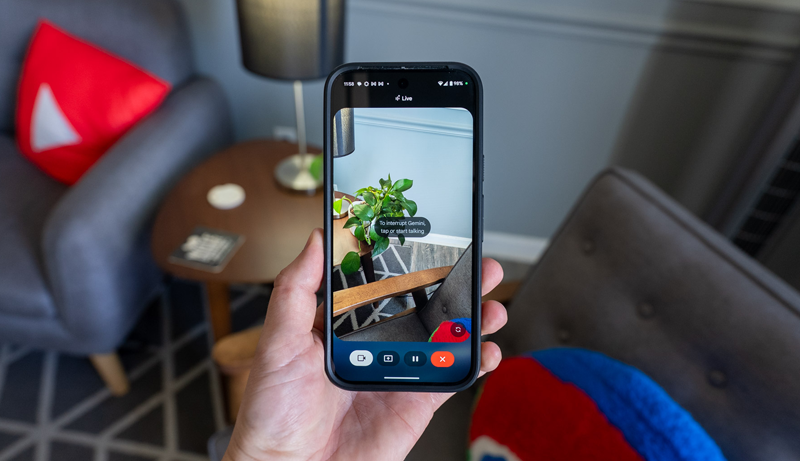
The Gemini Live camera feature is designed to bring visual understanding into real-time AI conversations. Instead of relying only on spoken descriptions, users can use their device camera to show what they are seeing. This allows the AI to interpret visual details instantly and respond in a more practical, context-aware way.
When the camera is activated, Gemini Live processes visual input alongside voice commands. The system analyzes objects, text, or scenes captured by the camera and combines that information with the ongoing conversation. This creates a smoother interaction where users can ask questions naturally while pointing their camera at something in front of them.
The feature works seamlessly within the Gemini ecosystem developed by Google, which focuses on multimodal AI experiences. Visual data is handled in real time, ensuring responses remain fast and relevant without breaking the flow of conversation. Users don’t need to switch modes or repeat instructions.
Privacy and control play an important role in how the camera feature operates. The camera is only active when the user enables it, and visual input is used specifically to answer the current request. This approach helps maintain trust while still delivering powerful visual assistance.
Overall, the Gemini Live camera feature enhances how users interact with AI by blending sight and speech. It transforms simple conversations into interactive experiences, making real-world problem-solving, learning, and exploration more intuitive and engaging.
Devices That Support Gemini Live Camera
Gemini Live camera functionality is designed to work across modern devices that can handle real-time visual processing and AI interactions. Device compatibility plays a major role in how smoothly the camera feature performs, as it relies on hardware capabilities, operating system support, and deep AI integration. Understanding which devices support Gemini Live camera helps users know where they can access the most advanced features.
Android Smartphones and Tablets
Android devices are currently the primary platform expected to support Gemini Live camera features. Since Gemini is deeply integrated into the Android ecosystem, most modern Android smartphones and tablets with updated hardware are well-positioned to handle live camera interactions. Devices running recent Android versions benefit from better AI optimization, faster on-device processing, and smoother access to camera APIs.
Flagship Android phones, especially those with powerful processors, advanced cameras, and sufficient RAM, offer the best experience. These devices can process visual input in real time while maintaining an active voice conversation, which is essential for Gemini Live camera functionality. Tablets also play an important role, particularly for tasks like learning, demonstrations, and visual explanations where larger screens enhance usability.
Android’s flexibility allows Gemini Live camera features to scale across different manufacturers, screen sizes, and form factors. However, performance may vary depending on device specifications. Older or budget devices may support limited functionality, while newer models provide faster responses and more accurate visual understanding during live interactions.
Google Pixel Devices
Google Pixel devices are among the most optimized options for Gemini Live camera support. Built with AI-first hardware and software integration, Pixel phones are designed to showcase advanced Gemini capabilities. Their tight integration with Google services allows Gemini Live to access camera data, voice input, and contextual information efficiently.
Pixel devices benefit from dedicated AI processing components that enhance real-time visual analysis. This makes them particularly well-suited for features like object recognition, text interpretation, and contextual assistance through the camera. Users on Pixel phones often receive new Gemini features earlier, making them a reliable choice for experiencing the full potential of Gemini Live camera.
In addition, Pixel devices are consistently updated with the latest Android versions and security enhancements. This ensures long-term compatibility with evolving Gemini Live features. The combination of hardware optimization, timely updates, and AI-focused design places Pixel devices at the forefront of Gemini Live camera support.
iOS Devices and Cross-Platform Availability
Support for Gemini Live camera on iOS devices depends on platform-level permissions and feature rollouts. While Gemini Live is accessible on iPhones and iPads through supported apps, camera-based functionality may be more limited compared to Android. This is largely due to tighter system controls and differences in how AI features integrate with the operating system.
That said, modern iOS devices with strong processors and high-quality cameras are technically capable of supporting live visual AI interactions. As Gemini continues to expand, camera features may become more widely available on iOS, particularly for newer devices that meet performance requirements. Cross-platform consistency is an important goal, but feature parity often arrives gradually.
Users on iOS can still benefit from Gemini Live’s core conversational strengths, with camera support potentially expanding over time. The experience may vary depending on device model, operating system version, and how deeply Gemini features are integrated within the app environment.
Supported Laptops and Hybrid Devices
Beyond smartphones and tablets, certain laptops and hybrid devices may also support Gemini Live camera functionality. Devices with built-in webcams, microphones, and sufficient processing power can enable visual interaction during live AI conversations. Chromebooks, in particular, are well-positioned due to their close integration with Google services and cloud-based AI processing.
Hybrid devices like 2-in-1 laptops offer flexibility for camera-based interactions, especially in educational or professional settings. Larger screens make it easier to view visual explanations while engaging in live conversations. Performance depends on camera quality, system resources, and software compatibility.
As Gemini Live evolves, broader device support is expected. Camera-enabled laptops and hybrid devices provide additional ways to experience visual AI assistance, expanding Gemini Live camera use beyond mobile platforms without shifting focus away from real-time interaction.
Gemini Live Camera vs Image Upload — What’s the Difference?
Gemini Live camera and image upload may seem similar on the surface, but they serve very different purposes. The biggest distinction lies in timing. The live camera feature is designed for real-time interaction, allowing users to show what they are seeing and get immediate responses. Image upload, on the other hand, is a static process that analyzes a single captured image.
With Gemini Live camera, the experience feels more like a conversation. Users can move their camera, ask follow-up questions, and adjust what they are showing without restarting the interaction. This continuous flow makes it ideal for real-world assistance, learning, and exploration where context changes moment by moment.
Image upload is more controlled and deliberate. Users take or select a photo, upload it, and wait for analysis. While this method is useful for detailed review, it lacks the dynamic back-and-forth that live camera interaction provides. Any change usually requires uploading a new image.
Another key difference is how context is handled. Gemini Live camera keeps track of both visual input and conversation history, creating more natural responses. Image uploads focus mainly on the single image provided, with limited awareness of prior discussion.
Both features are part of the broader Gemini ecosystem developed by Google. While image upload offers precision and control, Gemini Live camera emphasizes speed, continuity, and real-time understanding, making each option suitable for different user needs and scenarios.
| Feature | Gemini Live Camera | Image Upload |
|---|---|---|
| Interaction Type | Real-time and continuous | Static and one-time |
| Input Method | Live camera feed with voice interaction | Single image selected or captured |
| Response Speed | Instant responses during the session | Response after image analysis |
| Context Awareness | Maintains ongoing visual and conversational context | Limited to the uploaded image |
| Flexibility | Users can move the camera and ask follow-up questions | Requires re-uploading for changes |
| Best Use Case | Real-world assistance, live guidance, exploration | Detailed analysis of a specific image |
| User Experience | Conversational and dynamic | Structured and controlled |
| Workflow | No interruption while interacting | Separate steps for upload and review |
How to Enable Camera in Gemini Live
Enabling the camera in Gemini Live allows users to interact with AI through real-time visuals instead of relying only on voice or text. The process depends on device permissions, app settings, and system compatibility. Understanding each step helps ensure smooth activation while maintaining privacy and performance during live visual interactions.
Check Device and App Compatibility
Before enabling the camera in Gemini Live, it’s important to confirm that your device and app version support the feature. Gemini Live camera functionality requires a modern device with a working camera, microphone, and sufficient processing power to handle real-time AI tasks. Smartphones and tablets running updated operating systems generally provide the best compatibility, especially those optimized for AI features.
Start by ensuring that the Gemini app or supported platform is updated to the latest version. Older versions may not display camera options even if the device hardware supports it. App updates often include feature rollouts, performance improvements, and bug fixes related to live interactions. Keeping both the operating system and app current reduces the chances of missing camera-related settings.
Hardware also plays a role. Devices with higher-quality cameras and faster processors deliver smoother visual recognition and faster responses. While some older devices may still show the camera option, performance can vary. Verifying compatibility upfront prevents confusion and ensures a stable Gemini Live camera experience once enabled.
Grant Camera and Microphone Permissions
Camera access in Gemini Live cannot function without proper permissions. When opening Gemini Live for the first time, the app may prompt you to allow access to your camera and microphone. These permissions are essential, as the camera captures visual input while the microphone supports real-time conversation during live sessions.
If the permission prompt was previously denied, you can manually enable access through your device settings. Navigate to your app permissions menu, locate Gemini, and turn on camera and microphone access. Without both permissions enabled, the camera feature may remain hidden or non-functional within Gemini Live.
Privacy controls are central to how Gemini Live operates. The camera only activates when explicitly enabled by the user, and access can be revoked at any time. This ensures users remain in control of when and how visual data is shared. Proper permission setup is a foundational step that allows Gemini Live to combine voice and visuals seamlessly.
Enable Camera During a Live Session
Once compatibility and permissions are confirmed, the camera can be enabled directly during a Gemini Live session. Start by opening Gemini Live and initiating a voice conversation. Within the interface, a camera icon or visual input option typically appears when the feature is available for your device.
Tapping the camera option activates live visual input, allowing Gemini Live to interpret what the camera sees in real time. Users can point the camera at objects, text, or scenes while continuing to speak naturally. The system processes both voice and visuals together, creating a more interactive and context-aware experience.
The camera remains active only for the duration of the session or until manually turned off. This design prevents unnecessary background usage and helps conserve battery life. Users can switch the camera on and off as needed without restarting the conversation, maintaining a smooth and uninterrupted workflow during live interactions.
Manage Settings and Optimize Performance
To get the best experience with Gemini Live camera, users may need to adjust a few in-app and system settings. Lighting conditions, camera focus, and device stability all influence how accurately visuals are interpreted. Ensuring good lighting and steady camera positioning improves recognition and response quality.
Within the app settings, users may find options related to data usage, performance modes, or AI features. Adjusting these settings can help balance responsiveness and resource consumption, especially on mid-range devices. Background app restrictions should also be reviewed to prevent interruptions during live camera sessions.
Because Gemini Live is part of the ecosystem developed by Google, updates and feature improvements are rolled out regularly. Keeping notifications enabled for app updates ensures continued access to camera enhancements, performance optimizations, and expanded device support as the feature evolves.
Common Issues With Gemini Live Camera
While the Gemini Live camera feature is designed for smooth real-time interaction, users may occasionally run into technical or usability issues. These problems are usually related to device settings, permissions, or performance limitations rather than the feature itself. Understanding common issues makes it easier to troubleshoot and continue using the camera effectively.
One frequent issue is the camera option not appearing in Gemini Live. This often happens when the app is not updated to the latest version or when the device does not meet compatibility requirements. In some cases, the feature may be rolling out gradually, meaning it’s not immediately available to all users or devices.
Permission-related problems are another common concern. If camera or microphone access is denied at the system level, Gemini Live cannot activate visual input. Even if the app is installed correctly, missing permissions can prevent the camera from turning on during live sessions.
Performance issues may also occur, especially on older or mid-range devices. Lag, delayed responses, or blurry visuals can result from limited processing power, low memory, or poor lighting conditions. A weak internet connection can further impact how quickly visual data is analyzed and returned as responses.
Battery drain is another issue users sometimes notice. Live camera usage consumes more power than voice-only interaction, particularly during extended sessions. Closing background apps and lowering screen brightness can help reduce power consumption.
Most of these issues can be resolved through simple adjustments, regular updates, and proper device setup. As Gemini Live continues to evolve within the ecosystem developed by Google, ongoing improvements aim to reduce these challenges and enhance overall reliability.
Is Gemini Live Camera Free or Paid?
Gemini Live Camera is free to use for most users through the Gemini mobile app on supported devices. Google has rolled out live camera and screen-sharing features without requiring a paid subscription, so you can point your phone’s camera at objects or scenes and get real-time AI responses without paying extra.
Earlier, more advanced live features like camera access were tied to a subscription such as Gemini Advanced or Google AI plans, but Google expanded access and now lets all Android and iOS users enjoy camera-enabled live interaction in Gemini Live as part of the free tier.
That said, some enhanced AI capabilities or extended limits (like deeper research tools, priority access, or highly advanced models) remain part of paid Google AI Pro/Advanced plans. These subscriptions are separate from basic camera access in Gemini Live and mostly unlock premium AI performance and features beyond what standard users receive.
In short, the live camera feature in Gemini Live is available at no extra cost for regular use, with paid plans offering additional benefits but not necessary for basic camera-based AI interactions.
Privacy and Safety With Gemini Live Camera
Privacy and safety are central to how the Gemini Live camera feature is designed. Since the camera involves real-world visuals, the system is built to give users full control over when the camera is active. The camera only turns on when explicitly enabled during a live session, ensuring there is no background or unintended visual access.
Gemini Live processes camera input to respond to the user’s immediate request, rather than continuously recording visuals. This means visual data is used contextually to support the conversation and is not activated outside the active session. Users can disable the camera at any time with a single action, reinforcing transparency and user control.
Permission management plays a key role in safety. Camera and microphone access must be granted at the device level, and these permissions can be reviewed or revoked whenever needed. Without user approval, Gemini Live cannot access visual input, which helps prevent accidental or unauthorized usage.
Another important aspect is how sensitive content is handled. Gemini Live is designed to avoid retaining personal or unnecessary visual details beyond what is required to answer the current query. This approach minimizes data exposure while still delivering useful, real-time assistance.
Because Gemini Live is part of the ecosystem developed by Google, it follows established security standards and privacy policies. Regular updates and safeguards are implemented to address emerging risks and improve protection.
Overall, Gemini Live camera balances functionality with responsibility. By prioritizing user consent, limited access, and transparent controls, it aims to provide helpful visual AI experiences without compromising privacy or safety.
Gemini Live Camera vs ChatGPT Vision
Gemini Live Camera and ChatGPT Vision both bring visual intelligence to AI assistants, but they’re built with somewhat different focuses and capabilities. Gemini Live emphasizes real-time camera interaction during live conversations on mobile devices, while ChatGPT Vision centers on interpreting uploaded images and visual content within ChatGPT’s broader multimodal platform. Understanding how each works helps clarify which tool performs better for specific visual tasks.
One of the biggest differences is real-time camera support. Gemini Live Camera lets users show what’s around them using their device camera and receive instant responses, making it feel like an assistant that “sees” what you see. This dynamic interaction is available directly within the Gemini mobile app and can analyze scenes, objects, and text live. In contrast, ChatGPT Vision traditionally works through image uploads, where you upload a photo and the AI analyzes it rather than interpreting a live feed. While reports suggest that a live camera feature may be in development for ChatGPT, it hasn’t yet been broadly released as a seamless live vision experience.
Context awareness is another point of difference. Gemini Live is deeply integrated with Android devices and built to maintain conversational context while processing visual input, supporting ongoing back-and-forth dialogue based on what the camera sees. Meanwhile, ChatGPT Vision excels at detailed image analysis and reasoning with uploaded visuals, and benefits from ChatGPT’s broader multimodal model, which is strong in interpreting complex visuals with text and image combined.
Performance also varies by platform integration. Gemini Live Camera takes advantage of Google’s ecosystem and Android integration to offer smooth, device-level visual assistance. ChatGPT Vision works across platforms (web, iOS, Android) and is tied to OpenAI’s extensive vision-language models, letting users interact with images in depth, though its “live camera” capabilities are still evolving.
In practical use, Gemini Live Camera feels more natural for real-world visual questions and live guidance, while ChatGPT Vision shines when you need detailed analysis of specific images or diagrams within a multimodal conversation.
| Feature | Gemini Live Camera | ChatGPT Vision |
|---|---|---|
| Visual Input Type | Live, real-time camera feed | Image upload (static images) |
| Interaction Style | Continuous, conversational, and hands-free | Prompt-based with follow-up questions |
| Real-Time Visual Analysis | Yes, analyzes what the camera sees instantly | No live feed; analyzes uploaded images only |
| Best Use Case | Real-world guidance, object identification, live assistance | Detailed image analysis, diagrams, screenshots |
| Context Handling | Maintains visual + voice context during live sessions | Context tied mainly to the uploaded image |
| Platform Integration | Strong integration with Android ecosystem | Works across web, iOS, and Android |
| Ease of Use | Point camera and talk naturally | Capture or upload image, then ask |
| Performance Focus | Speed and live interaction | Accuracy and deeper reasoning |
| Developed By | OpenAI | |
| Ideal For | On-the-go help and exploration | In-depth visual understanding |
Frequently Asked Questions (FAQs)
Is Gemini Live Available With Camera Support?
Yes, Gemini Live is available with camera support on supported devices. You can use the camera during a live session to show objects, text, or surroundings and receive real-time responses. Availability depends on your device, operating system version, and whether the feature has rolled out to your region. Keeping the app updated improves access to camera functionality.
Which Devices Support Gemini Live Camera?
Gemini Live camera works best on modern smartphones and tablets with updated hardware. Android devices, especially newer models, offer the most consistent support. Some iOS devices can access Gemini Live, but camera features may be limited compared to Android. Your device must have a working camera, microphone, and sufficient processing power for real-time interaction.
How Do You Enable Camera In Gemini Live?
To enable the camera, you need to start a Gemini Live session and grant camera and microphone permissions. If permissions were previously denied, you can enable them in your device settings. Once enabled, a camera option appears during the live conversation, allowing you to activate visual input instantly.
Is Gemini Live Camera Free To Use?
Gemini Live camera is available at no additional cost for basic usage. You do not need a paid subscription to access standard live camera interactions. However, some advanced AI features or higher-tier capabilities may be part of premium plans, depending on your region and account type.
Does Gemini Live Camera Record Or Store Videos?
No, Gemini Live camera does not continuously record or store videos. The camera is active only during the live session and processes visuals to respond to your request. You remain in control and can turn off the camera at any time, ensuring privacy and transparency.
What Can You Do With Gemini Live Camera?
You can use Gemini Live camera to get help with real-world tasks, identify objects, read text, understand scenes, or receive step-by-step guidance. By showing instead of explaining, you make interactions faster and more natural, especially when dealing with visual or situational questions.
Conclusion
As AI technology continues to evolve, real-time visual interaction is becoming an essential part of modern digital experiences. Users now expect AI tools to understand not just words, but also the world around them. This growing demand has made visual features more relevant than ever.
Many users still ask whether is gemini live available camera for practical, everyday use. The answer depends on device compatibility, permissions, and feature availability, but the direction is clear. Gemini Live is moving toward more immersive, camera-based interactions that support natural and intuitive communication.
Understanding how is gemini live available camera fits into the broader AI ecosystem helps users set realistic expectations. With ongoing updates, improved privacy controls, and expanding device support, Gemini Live continues to shape how people interact with AI through both voice and visuals in real time.