
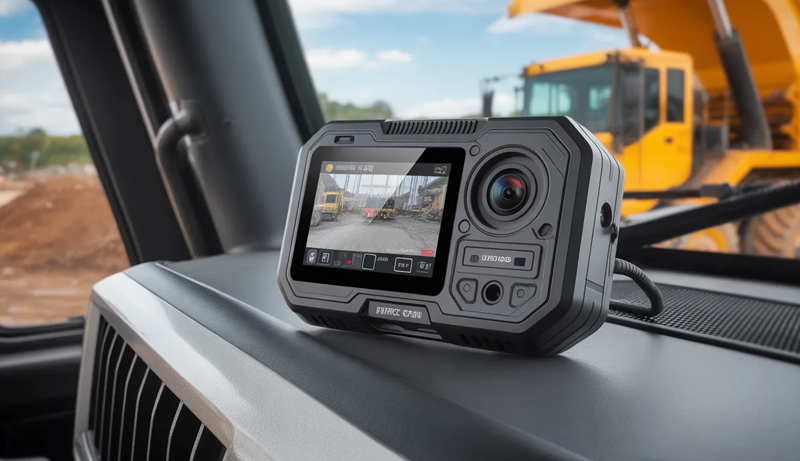
Best Smart Dash Cams for Dump Trucks for 2026
Dump trucks operate in some of the most demanding and high-risk environments on the road. From congested construction zones and uneven terrain to long operating hours and frequent stops, these vehicles face higher accident exposure and liability than standard passenger cars. Without reliable video documentation, even minor incidents can escalate into costly disputes, insurance claims, or downtime that impacts productivity.
Modern dash cam technology has evolved far beyond simple video recording. Today’s systems offer ultra-high-definition footage, wide-angle coverage, night vision, GPS tracking, and automatic incident detection. These capabilities help protect drivers, provide accurate evidence, and improve accountability during daily operations. For dump truck owners and fleet operators, choosing the right system means balancing video quality, reliability, ease of use, and long-term durability.
Finding the Best Smart Dash Cams for Dump Trucks requires understanding how well a device performs in real-world conditions, not just on paper. In the sections below, we review several popular dash cam options, breaking down their performance, strengths, limitations, and ideal use cases to help you make an informed decision without focusing on brand bias.
TERUNSOUL 4K+4K Dash Cam Front and Rear
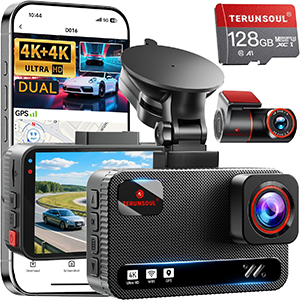
The TERUNSOUL 4K+4K dash cam stands out for its rare ability to record both front and rear footage simultaneously in true 4K resolution. This dual-channel Ultra HD recording provides exceptional clarity, making it easier to identify license plates, road markings, and surrounding vehicles—an important advantage for dump trucks operating in crowded or high-risk environments. The wide 170° front lens offers broad road coverage, reducing blind spots and capturing activity across multiple lanes.
Installation is straightforward, even for users without technical experience. Customers consistently highlight its intuitive interface, clear on-screen menus, and well-written instructions. The included 128GB memory card allows immediate use out of the box, while support for up to 512GB ensures extended recording time for long shifts. Loop recording works seamlessly, and the G-sensor reliably locks collision footage to prevent accidental overwriting.
Night performance is another strong area. Enhanced WDR combined with large-aperture lenses produces bright, detailed footage in low-light conditions, which is critical for early morning or nighttime dump truck operations. Built-in GPS adds valuable context by embedding speed and route data directly into video files, strengthening accident evidence.
The 5.8GHz WiFi connection enables fast video access through a mobile app, making it easy to download or share clips when needed. Parking mode adds another layer of protection, though it requires a separate hardwire kit.
Pros
- True 4K front and rear recording
- Wide-angle coverage
- Strong night vision performance
- Built-in GPS and fast WiFi
- Includes 128GB memory card
Cons
- Parking mode requires additional hardware
- Requires stable power supply
Ideal For
Owner-operators or small fleets needing premium video quality, strong night recording, and easy usability without complex setup.
ROVE R2-4K DUAL Dash Cam Front and Rear
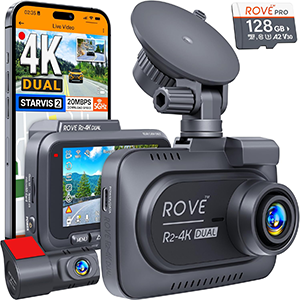
The ROVE R2-4K DUAL dash cam is a well-rounded option that balances performance, features, and ease of use. It records in 4K at the front and Full HD at the rear, delivering clear footage for most road and job-site scenarios. The inclusion of a Sony STARVIS 2 sensor significantly improves low-light performance, making it effective for night driving and poorly lit work zones.
Users frequently praise the camera’s crisp video quality and user-friendly setup. The interface is intuitive, and the included 128GB memory card ensures immediate usability. The front and rear wide-angle lenses capture a broad field of view, helping reduce blind spots common with dump trucks.
WiFi connectivity is fast, supporting quick downloads through the mobile app, although customer feedback indicates mixed experiences with connection stability. Built-in GPS adds another layer of value by embedding speed and route data into recordings, which can be helpful for incident review and compliance documentation.
The parking mode is versatile, offering time-lapse, motion detection, and collision detection options. However, like many systems, it requires a separate hardwire kit. A supercapacitor instead of a battery improves durability in extreme temperatures, which is beneficial for heavy-duty use.
Pros
- Excellent front video quality
- STARVIS 2 sensor for night recording
- Built-in GPS and fast WiFi
- Supercapacitor for heat resistance
Cons
- Rear camera limited to 1080p
- Mixed feedback on WiFi stability
Ideal For
Dump truck operators seeking reliable performance, strong night vision, and balanced features at a reasonable cost.
REDTIGER 4K Dash Cam Front Rear (F7NP)
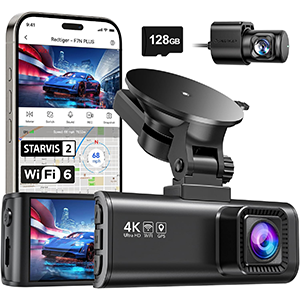
The REDTIGER F7NP offers strong on-paper specifications, including 4K front recording, Full HD rear footage, and a STARVIS 2 sensor for enhanced night visibility. When functioning properly, it delivers sharp daytime footage and balanced low-light performance, making it suitable for capturing critical driving events.
Installation is generally simple, and many users appreciate the included memory card and straightforward interface. The wide-angle lenses provide good coverage, and loop recording ensures continuous operation. Built-in GPS allows speed and route tracking, adding useful context to recorded videos.
However, long-term reliability is a concern based on customer feedback. Some users report connectivity issues with the mobile app or the device stopping unexpectedly after limited use. While others experience smooth operation, this inconsistency may be a drawback for fleets that rely on uninterrupted recording.
The use of a supercapacitor improves safety and durability in high temperatures, which is important for dump trucks operating in hot climates. Parking mode and G-sensor features work as expected but require proper hardwiring.
Pros
- Sharp 4K front recording
- Good night vision with STARVIS 2
- Built-in GPS
- Supercapacitor design
Cons
- Mixed reliability reports
- App connectivity issues for some users
Ideal For
Individual drivers who want strong video quality and are willing to monitor performance closely.
ROVE R2-4K Dash Cam (Single Channel)
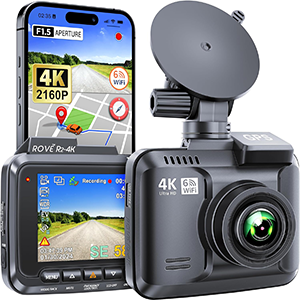
The single-channel ROVE R2-4K focuses on front-facing recording, delivering high-quality 4K footage with strong clarity and color accuracy. It’s a simpler option compared to dual-camera systems, making it appealing for users who prioritize ease of use and front-road documentation.
Video quality is consistently praised, especially during daylight. Super night vision technology improves low-light performance, though it lacks rear coverage. Built-in GPS records speed and route data, adding value for documentation and evidence.
WiFi 6 connectivity allows wireless access to footage, though feedback on recording consistency is mixed. The supercapacitor design enhances longevity and heat resistance. Parking mode and motion detection features are available but may require additional setup.
Pros
- Excellent 4K front recording
- Simple operation
- Built-in GPS
- Durable supercapacitor
Cons
- No rear camera
- Mixed feedback on recording reliability
Ideal For
Drivers who only need front-facing evidence and prefer a straightforward, compact solution.
VIRROW 4K+2.5K Dash Cam Front and Rear
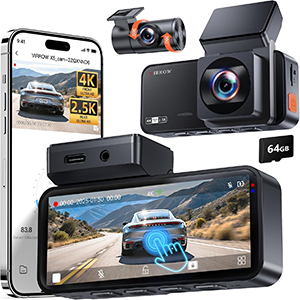
The VIRROW dash cam delivers strong overall value with 4K front and 2.5K rear recording, providing clearer rear footage than many competitors. Its wide-angle lenses significantly reduce blind spots, making it useful for larger vehicles like dump trucks.
The touchscreen interface is responsive and user-friendly, simplifying setup and playback. Night vision performance is impressive, with clear detail retention in low-light conditions. Loop recording and the included 64GB memory card ensure continuous operation without immediate upgrades.
Parking mode and time-lapse features add security, though a hardwire kit is required. Installation is generally easy, and customer feedback highlights consistent performance and reliability.
Pros
- High-resolution front and rear recording
- Excellent night vision
- Touchscreen interface
- Good value for price
Cons
- Hardwire kit sold separately
- Smaller included memory card
Ideal For
Drivers wanting strong rear clarity, easy controls, and reliable performance without premium pricing.
What Is a Smart Dash Cam? (And Why It’s Better Than a Standard Dash Cam)
A smart dash cam is an advanced vehicle camera system designed not just to record video, but to actively improve safety, accountability, and fleet performance. Unlike basic dash cams that simply capture footage, smart dash cams use connected technologies such as AI, GPS, and cloud storage to analyze driving events and provide actionable insights in real time.
Traditional dash cams are largely passive tools. They record video to a memory card, require manual retrieval, and offer limited visibility beyond what the driver remembers to save. If footage is overwritten or the camera is damaged, critical evidence may be lost. These devices also lack context, such as vehicle location, speed, or driver behavior before an incident.
Smart dash cams, on the other hand, automatically detect risky events like hard braking, collisions, or sudden swerves. They securely upload footage to the cloud, tag it with time and location data, and make it instantly accessible to fleet managers. This automation removes guesswork and ensures important moments are never missed.
For dump trucks and heavy-duty vehicles, these features are especially valuable. Large blind spots, frequent reversing, and operation in high-risk environments like construction sites demand more than basic video recording. Smart dash cams help monitor site safety, document loading and unloading activities, and provide visibility in complex work zones.
Beyond safety, smart dash cams support driver coaching, compliance, and operational efficiency. By identifying patterns and risks early, fleets can reduce accidents, control costs, and build a stronger safety culture—benefits that standard dash cams simply cannot deliver.
Key Features to Look for in the Best Smart Dash Cam for Dump Trucks
Choosing the right smart dash cam for dump truck operations requires more than basic video recording. Heavy-duty vehicles operate in high-risk, high-liability environments where safety, compliance, and documentation are critical. The best solutions combine intelligent monitoring, rugged hardware, and connected software to protect drivers, reduce accidents, and give fleet managers real-time visibility across jobsites and roadways.
AI-Powered Driver Monitoring
AI-powered driver monitoring transforms a dash cam from a passive recorder into an active safety system. Using computer vision and behavior analysis, these systems continuously monitor driver actions to identify signs of fatigue, distraction, or unsafe behavior. For dump truck drivers who work long shifts or operate in demanding environments, early detection of risk can prevent serious accidents before they occur.
Fatigue detection is one of the most valuable capabilities. The system analyzes indicators such as eye closure, head position, and reaction patterns to detect drowsiness. When fatigue is identified, real-time alerts prompt the driver to refocus or take a break, reducing the chance of slow reaction times or loss of control.
Distracted driving alerts further enhance safety. AI can detect phone usage, smoking, eating, or looking away from the road. Immediate in-cab notifications correct behavior instantly, while recorded events allow fleet managers to provide targeted coaching later. This approach improves driver habits without relying solely on disciplinary measures.
Real-time notifications extend beyond the cab. Fleet managers can receive instant alerts for high-risk events, enabling fast intervention and documentation. Over time, this data helps identify trends, reduce repeat incidents, and build a measurable safety culture across dump truck operations.
Dual-Facing or Multi-Camera Support
Dump trucks require more visibility than standard vehicles, making dual-facing or multi-camera support a critical feature. A road-facing camera captures external driving conditions, traffic behavior, and incidents, while a cab-facing camera provides insight into driver actions during key moments. Together, they deliver a complete picture of what happens before, during, and after an event.
Cab-facing cameras are particularly important for accountability and training. They help confirm whether a driver was attentive, following safety protocols, and responding appropriately to hazards. This is essential when investigating incidents or defending against false claims that place blame solely on the driver.
For dump trucks, compatibility with side and rear cameras adds significant value. These vehicles often reverse into tight job sites, navigate uneven terrain, and operate near workers or equipment. Side and rear camera integration helps document blind-spot incidents, backing accidents, and on-site collisions that front-facing cameras alone cannot capture.
Multi-camera systems also support operational transparency. Footage from different angles can verify loading and unloading procedures, confirm site conditions, and document damage claims. This level of visibility reduces disputes with contractors, clients, and insurers while improving overall job-site safety.
GPS Tracking & Telematics
GPS tracking and telematics turn dash cam footage into actionable operational data. Beyond recording video, these systems log vehicle location, speed, and movement patterns, providing valuable context for every trip and incident. For dump truck fleets managing multiple routes and job sites, this visibility is essential.
Route history allows fleet managers to review where vehicles have traveled, how long they stayed on-site, and whether they followed assigned routes. This helps improve dispatch efficiency, reduce unauthorized use, and verify service completion for billing or compliance purposes.
Speed monitoring adds another layer of safety and accountability. By correlating video with speed data, managers can identify speeding patterns, aggressive driving, or unsafe behavior in specific zones. This data supports driver coaching and helps reduce accident frequency over time.
Job-site verification is especially valuable for dump truck operations. GPS data confirms arrival times, departure times, and duration at specific locations. When combined with video evidence, it helps resolve disputes over delays, material delivery issues, or site-related damage, protecting both drivers and fleet owners.
Cloud Storage & Remote Access
Cloud storage and remote access are defining features of modern smart dash cams. Instead of relying on physical memory cards that can be lost, damaged, or overwritten, cloud-based systems automatically upload footage to secure servers. This ensures critical evidence is preserved and accessible when needed.
Automatic uploads occur when incidents are detected, such as harsh braking, collisions, or triggered alerts. These event-based clips are tagged and stored without driver intervention, reducing the risk of missing or deleted footage. This automation is especially important in high-stress or fast-moving situations.
Remote access allows fleet managers to review footage from anywhere, without waiting for vehicles to return to the yard. This speeds up incident investigations, insurance reporting, and internal reviews. Faster access means faster decisions and reduced downtime.
Secure access controls protect sensitive data. Role-based permissions ensure only authorized personnel can view or share footage. This is essential for maintaining driver trust, meeting data privacy requirements, and ensuring footage is used responsibly for safety and legal purposes.
Night Vision & Weather Durability
Dump trucks operate around the clock and in harsh environments, making night vision and durability essential features. Low-light and infrared recording ensure clear footage during nighttime driving, early morning shifts, or poorly lit job sites where standard cameras often fail.
Infrared or enhanced low-light sensors capture critical details such as road markings, pedestrians, and equipment even in darkness. This improves incident reconstruction and ensures evidence remains usable regardless of lighting conditions.
Vibration resistance is equally important. Dump trucks generate constant movement from rough terrain, heavy loads, and uneven surfaces. A well-built dash cam must maintain stable recording without image distortion or hardware failure under continuous vibration.
Protection against heat, dust, and water further defines reliability. Cameras designed with high IP ratings withstand extreme temperatures, airborne debris, and exposure to rain or mud. This durability ensures consistent performance and reduces maintenance or replacement costs in demanding work environments.
Compliance & Legal Protection
Compliance and legal protection are major reasons fleets invest in smart dash cams. Dump truck operations often fall under strict regulatory oversight, making accurate documentation essential. Dash cam systems help support compliance with FMCSA and DOT requirements by providing objective driving records.
Recorded footage serves as a powerful defense in insurance claims and legal disputes. Video evidence can quickly establish fault, disprove false allegations, and shorten claim resolution times. This reduces legal expenses and helps protect a fleet’s safety record.
Tamper-proof recording is critical for credibility. Secure systems prevent unauthorized deletion or modification of footage, ensuring evidence remains intact and admissible if needed. This is especially important in serious incidents involving injuries or property damage.
By combining compliance support with transparent documentation, smart dash cams protect both drivers and fleet owners. They create a reliable record of events that strengthens legal standing while reinforcing safe and compliant driving behavior across the fleet.
Smart Dash Cam vs Fleet Camera Systems for Dump Trucks
When selecting video technology for dump truck safety and oversight, two primary options emerge: smart dash cams and fleet camera systems. While both improve visibility and documentation, they differ substantially in cost, installation complexity, and scalability—factors that matter greatly for operations managing multiple heavy-duty vehicles. Understanding these differences helps fleet managers choose the right solution for their budget, size, and long-term needs.
Cost Comparison
Smart dash cams generally offer a lower upfront cost compared to full fleet camera systems. A standalone smart dash cam typically integrates AI monitoring, GPS, cloud connectivity, and incident alerts into a single unit. Because it’s self-contained, you avoid the expense of additional sensors, wiring, or infrastructure. For smaller fleets or operators with limited capital, this makes smart dash cams a cost-effective way to enhance safety without breaking the budget.
In contrast, fleet camera systems often consist of multiple cameras per vehicle—road-facing, rear, side, and interior units—plus telematics hardware and a comprehensive management platform. While this improves coverage, it raises equipment and subscription costs. Installation labor and potential downtime further increase expenses, especially for large fleets.
Total cost of ownership also differs. Smart dash cams typically include cloud storage and analytics in bundled subscriptions, simplifying budgeting. Fleet systems may charge separately for software modules, advanced analytics, driver performance scoring, or API integrations. Over time, those recurring fees can outweigh the initial hardware difference, so it’s important to compare complete long-term costs, not just sticker prices.
Installation Complexity
Smart dash cams are designed for straightforward installation. Most units mount easily to the windshield or dashboard, draw power from the vehicle’s fuse box or OBD port, and connect wirelessly to cellular networks for data uploads. For fleets with basic needs, this plug-and-play approach minimizes labor, reduces vehicle downtime, and allows installations to be completed quickly by in-house technicians.
Fleet camera systems, however, tend to be more complex. Multiple cameras must be placed strategically around the vehicle, often requiring custom mounts, hardwiring, and integration with onboard telematics. For dump trucks with additional sensors—such as load-weight monitors, rear proximity detectors, or automated braking systems—the installation process can be significantly more involved.
This complexity extends to software setup. A full fleet management platform usually requires configuration of driver profiles, alert thresholds, geofencing, and reporting dashboards. While these features offer deeper insights, they also demand more time and expertise to implement correctly. Smaller operations or fleets without dedicated IT support may find the process cumbersome or reliant on vendor technicians.
Scalability for Growing Fleets
Scalability is another key difference. Smart dash cams scale easily as fleets grow. Because each unit operates autonomously and connects directly to cloud services, adding new vehicles simply means installing additional cams and activating subscriptions. There’s no central server or complex network architecture to modify, and managers can instantly view new vehicles in the existing dashboard with minimal setup.
Fleet camera systems can also scale, but with more planning. A fleet management platform may require adjustments to server capacity, licensing agreements, or data workflows as vehicle counts increase. Integrations with payroll, safety, or certification systems become more intricate and may need professional coordination.
For large enterprises seeking unified visibility across thousands of assets, a fleet camera system’s centralized structure may ultimately be advantageous—offering stronger analytics, cross-fleet benchmarking, and robust API support. But for mid-size and growing fleets focused on core safety and compliance goals, smart dash cams deliver flexibility, simplicity, and cost-effective scalability without the overhead of complex infrastructure.
In summary, smart dash cams excel at delivering essential safety features with minimal installation effort and predictable costs, while full fleet camera systems provide deeper coverage and analytics at higher complexity and expense. The right choice depends on fleet size, technology appetite, and long-term operational goals.
| Criteria | Smart Dash Cam | Fleet Camera System |
|---|---|---|
| Upfront Cost | Lower initial hardware cost; usually one primary device per vehicle | Higher upfront cost due to multiple cameras, sensors, and hardware |
| Ongoing Costs | Predictable monthly or annual subscription, often bundled with AI, GPS, and cloud storage | Higher recurring fees with separate charges for software modules, analytics, and integrations |
| Installation Complexity | Simple, plug-and-play installation; minimal wiring and vehicle downtime | Complex installation with multiple cameras, extensive wiring, and longer downtime |
| Vehicle Coverage | Primarily front-facing with optional cab-facing or add-on cameras | Full vehicle coverage (front, rear, sides, cab) by default |
| Scalability | Easy to scale—add new vehicles quickly with minimal configuration | Scales well but may require licensing changes, platform reconfiguration, and planning |
| Best for Fleet Size | Small to mid-size fleets or growing operations | Large fleets with dedicated IT or fleet management teams |
| Management Overhead | Low—simple dashboards and automated alerts | Higher—advanced dashboards, custom rules, and system administration |
| Use Case Fit | Cost-effective safety, compliance, and incident documentation | Enterprise-level visibility, analytics, and multi-system integration |
Benefits of Using Smart Dash Cams in Dump Trucks
Smart dash cams deliver measurable benefits for dump truck operations by combining video evidence, real-time alerts, and data-driven insights. These systems help fleets address safety risks, rising insurance costs, and operational inefficiencies common in heavy-duty environments. From protecting drivers to simplifying daily oversight, smart dash cams support safer, more accountable, and more efficient dump truck operations.
Reduced Accident Liability
Accident liability is one of the biggest risks facing dump truck fleets, especially in construction zones, urban streets, and active job sites. Smart dash cams significantly reduce this exposure by providing clear, objective video evidence of what actually happened before, during, and after an incident. This documentation helps establish facts quickly and prevents liability from being assigned based on assumptions or incomplete reports.
Video footage paired with GPS data, speed metrics, and event timestamps creates a full incident record. When disputes arise with other motorists, contractors, or pedestrians, fleets can demonstrate whether drivers followed procedures and operated safely. This often leads to faster claim resolutions and fewer legal escalations.
Real-time alerts also play a preventive role. By identifying risky behaviors such as harsh braking or distracted driving, smart dash cams help correct issues before they result in accidents. Over time, fewer incidents translate directly into reduced liability exposure.
For fleets operating multiple dump trucks daily, lowering even a small percentage of accidents can save substantial costs related to repairs, downtime, legal fees, and reputational damage.
Lower Insurance Premiums
Insurance costs for dump truck fleets continue to rise due to high claim severity and frequent incidents. Smart dash cams help counter this trend by proving a commitment to safety and risk reduction. Many insurers view video-based safety systems as proactive tools that lower accident frequency and claim costs.
Recorded footage allows insurers to assess fault accurately. When a fleet can clearly show that a driver was not at fault, claims are resolved faster and payouts are reduced. This improves a fleet’s loss history, which is a key factor in premium calculations.
Some insurance providers also offer discounts or preferred rates for fleets using advanced monitoring technology. Over time, consistent use of smart dash cams can lead to better policy terms, lower deductibles, or reduced premium increases.
Beyond direct savings, faster claim resolution reduces administrative burden. Fleet managers spend less time gathering statements and paperwork, allowing them to focus on operations instead of prolonged insurance disputes.
Improved Driver Behavior
Smart dash cams encourage safer driving habits by increasing awareness and accountability. When drivers know their actions are monitored fairly and consistently, they are more likely to follow safety protocols and remain attentive behind the wheel. This cultural shift plays a major role in reducing preventable incidents.
Real-time in-cab alerts address risky behaviors immediately. Notifications for speeding, distraction, or fatigue allow drivers to correct actions before they escalate into accidents. This instant feedback is more effective than delayed coaching based solely on reports or complaints.
Video-backed coaching also improves training outcomes. Managers can review specific events with drivers, focusing on real situations rather than hypothetical scenarios. This leads to more constructive conversations and clearer expectations.
Over time, improved driver behavior results in fewer violations, reduced vehicle wear, and stronger compliance records. Drivers also benefit from protection against false claims, reinforcing trust between drivers and management.
Easier Fleet Management
Managing dump truck fleets across multiple routes and job sites is complex. Smart dash cams simplify oversight by centralizing video, alerts, and vehicle data into a single platform. Fleet managers gain real-time visibility without needing to be physically present.
Automated incident detection reduces manual monitoring. Instead of reviewing hours of footage, managers are notified only when safety events occur. This saves time and ensures attention is focused where it matters most.
Remote access to footage and data streamlines decision-making. Managers can investigate incidents, verify job-site activity, and respond to issues quickly, even when vehicles are in the field. This improves responsiveness and operational control.
By reducing guesswork and paperwork, smart dash cams allow managers to oversee more vehicles efficiently while maintaining consistent safety standards across the fleet.
Theft and Fraud Prevention
Dump trucks are valuable assets and common targets for theft, misuse, and fraudulent claims. Smart dash cams act as a strong deterrent by continuously documenting vehicle activity, driver behavior, and job-site interactions.
Video evidence helps prevent internal misuse, such as unauthorized vehicle use or falsified work claims. GPS data confirms where vehicles traveled and how long they remained on-site, supporting accurate billing and payroll verification.
In cases of theft or vandalism, recorded footage can assist investigations and recovery efforts. Visual records of suspicious activity provide law enforcement and insurers with critical information.
Fraud prevention also extends to external claims. When individuals falsely allege property damage or unsafe driving, video footage allows fleets to quickly challenge inaccurate accusations, protecting both drivers and company finances.
Installation Tips for Dump Truck Dash Cams
Proper installation is critical to getting the full safety, legal, and operational value from a dump truck dash cam. Even the most advanced system can underperform if it’s poorly powered, incorrectly placed, or installed without considering real-world operating conditions. Following best practices helps ensure reliable recording, accurate data, and long-term durability in demanding environments.
Power Options (OBD vs Hardwired)
Choosing the right power source is one of the first and most important installation decisions. OBD-powered dash cams are popular for their simplicity. They plug directly into the vehicle’s onboard diagnostics port, making installation quick and non-invasive. This option works well for fleets that want fast deployment with minimal downtime, especially when vehicles rotate frequently.
Hardwired installations, however, are often better suited for dump trucks. By connecting directly to the fuse box or ignition system, hardwiring provides a more stable power supply and reduces the risk of accidental unplugging. It also enables features like parking mode, continuous recording, and more reliable voltage management.
In harsh environments with vibration and heavy electrical loads, hardwired systems tend to be more dependable long term. While installation requires more time and expertise, the added reliability often outweighs the initial effort. For fleets prioritizing uptime and consistent data capture, hardwiring is usually the preferred option.
Camera Placement Best Practices
Correct camera placement ensures clear footage and minimizes blind spots. The forward-facing camera should be mounted high on the windshield, centered behind the rearview mirror. This position provides the widest road view while keeping the camera out of the driver’s line of sight.
Cab-facing cameras should be angled to capture the driver’s upper body and face without obstructing controls or mirrors. Proper positioning is essential for accurate driver behavior detection and clear event review.
For dump trucks using additional side or rear cameras, placement should focus on known blind spots and high-risk areas such as backing zones, loading points, and passenger-side visibility gaps. Cameras must be securely mounted to withstand vibration, dust, and debris without shifting over time.
Always test the camera view after installation. Confirm clarity in daylight, low light, and during vehicle movement to ensure footage remains usable in real-world conditions.
Common Mistakes to Avoid
One common mistake is placing cameras too low or off-center, which limits visibility and reduces the value of recorded footage. Obstructed views caused by sun visors, decals, or dirty windshields can also compromise evidence quality.
Improper cable routing is another frequent issue. Loose or exposed wires can interfere with vehicle operation, become damaged, or create safety hazards. All wiring should be secured and protected from heat, sharp edges, and moving parts.
Failing to test the system after installation can lead to unnoticed issues such as poor angles, weak power connections, or disabled features. Fleets should verify recording, alerts, GPS tracking, and cloud uploads before deployment.
Avoid rushing installations. Taking the time to install dash cams correctly reduces maintenance issues, ensures compliance, and maximizes the long-term benefits of the system.
Cost of Smart Dash Cams for Dump Trucks
Investing in smart dash cams for dump trucks can deliver serious value, but understanding the cost elements helps fleets budget accurately and choose the best solution for their needs. Unlike basic dash cams, smart systems combine hardware, connectivity, and software—each influencing the total cost of ownership. Costs vary based on features, installation method, fleet size, and ongoing service plans, so it’s important to evaluate both upfront and recurring expenses.
Upfront Hardware Costs
The hardware price of a smart dash cam depends on the model, number of cameras, and additional sensors included. Basic smart dash cams with forward-facing and cab-facing cameras tend to cost less, while multi-camera systems (including side or rear cameras) increase the price. Heavy-duty builds designed for truck vibration, dust, and weather protection typically cost more than consumer units.
For dump truck fleets, expect smart dash cams to range from mid-range to premium hardware pricing compared to simple record-only devices. Higher-end models often include built-in GPS, AI driver monitoring, impact detection, and cellular modems for real-time connectivity.
Installation Costs
Installation is another key factor. Plug-and-play units that draw power from the OBD port or auxiliary power are cheaper and faster to deploy. Hardwiring into the vehicle’s electrical system increases labor costs but provides more reliable power, enables parking mode features, and reduces the risk of loose connections. Complex setups with multiple cameras and external sensors generally require professional installation, especially for heavy-duty dump trucks with custom cab layouts.
Connectivity and Subscription Fees
A significant part of the cost comes from recurring subscription plans. Smart dash cams use cellular data to upload footage, send alerts, and connect to fleet management platforms. Monthly or annual plans typically cover cloud storage, AI analytics, telematics data, and software access. Plans with higher video retention, advanced analytics, and larger data allowances cost more.
For fleets, subscription fees add predictability—comparable to other connected vehicle services—but they should be factored into long-term budgeting.
Total Cost of Ownership
When calculating total cost of ownership, include hardware, installation, connectivity subscriptions, and potential maintenance or replacement parts. While smart dash cams require more investment than basic cameras, the safety gains, insurance savings, and operational insights often offset expenses over time. Many fleets find that reduced claims, better driver behavior, and faster incident resolution deliver a strong return on investment.
| Cost Component | Typical Range | Notes |
|---|---|---|
| Hardware (per vehicle) | $150 – $700+ | Depends on number of cameras (single vs. multi-camera), build quality, and sensor features |
| Installation | $50 – $300+ | OBD or auxiliary power installations are cheaper; hardwired/multi-camera setups cost more |
| Monthly Connectivity Subscription | $15 – $40 | Covers cellular data, cloud uploads, firmware updates, and basic tracking |
| Advanced Software / Analytics | $10 – $30+ | Optional AI analytics, behavior scoring, custom reporting |
| Annual Maintenance / Replacement | $20 – $100 | Cable wear, camera replacements, mounting hardware refresh |
| Total First-Year Cost (avg) | $300 – $1,200+ | Includes hardware, installation, first year of data & software |
| Total Ongoing Annual Cost | $180 – $600+ | Subscription + maintenance after initial hardware |
Frequently Asked Questions (FAQs)
What Is The Best Smart Dash Cam For Dump Trucks?
The best smart dash cam for dump trucks is one that matches your specific operational needs rather than a single universal model. You should look for a system designed for heavy-duty vehicles with features such as AI-powered driver monitoring, GPS tracking, cloud storage, and multi-camera support. Durability is critical, so the camera should withstand vibration, dust, heat, and harsh job-site conditions. A good smart dash cam also integrates easily with fleet management software, offers secure data access, and provides real-time alerts to help you reduce accidents and protect your drivers.
Are Smart Dash Cams Legal In Dump Trucks?
In most regions, smart dash cams are legal to use in dump trucks, especially when installed for safety and fleet management purposes. However, laws vary by country and state, particularly regarding video and audio recording. You are generally allowed to record video of the road and vehicle interior, but you may be required to inform drivers that recording is taking place. Posting clear in-cab notices and having written driver consent policies helps ensure compliance with privacy and labor regulations.
Do Smart Dash Cams Record Audio?
Some smart dash cams do record audio, while others offer it as an optional or disabled-by-default feature. Audio recording laws are stricter than video laws in many locations, often requiring consent from one or all parties involved. If you choose to use audio recording, you should verify local regulations and clearly inform drivers. Many fleets disable audio recording altogether and rely on video, GPS, and event data, which is often sufficient for safety, coaching, and legal protection.
Can Dash Cams Help Lower Insurance Costs?
Yes, smart dash cams can help lower insurance costs over time. Insurers value video evidence because it helps determine fault quickly and reduces fraudulent claims. When you can prove your driver was not responsible for an accident, claims are resolved faster and with lower payouts. Many insurance providers also view dash cam usage as a proactive safety measure, which can lead to better policy terms, reduced premium increases, or eligibility for safety-related discounts.
Do Dump Truck Dash Cams Work Without Internet?
Dump truck dash cams can function without an active internet connection, but with limitations. They continue recording video locally to onboard storage even when cellular coverage is unavailable. However, features like real-time alerts, live tracking, and automatic cloud uploads require an internet connection. Once the truck reconnects to the network, stored footage and data are typically uploaded automatically. This ensures continuous recording while still benefiting from connected features when coverage is restored.
Are Smart Dash Cams Worth The Investment For Small Dump Truck Fleets?
Smart dash cams are often worth the investment even for small dump truck fleets. You gain protection against false claims, improved driver behavior, and better visibility into daily operations. For smaller fleets, a single accident or insurance claim can have a major financial impact. Smart dash cams help reduce those risks while simplifying fleet oversight, making them a practical and cost-effective tool for long-term safety and cost control.
Choosing the Right Smart Dash Cam for Your Dump Truck
Picking the right smart dash cam comes down to matching technology to how you run your fleet. Below is a practical checklist you can use to evaluate options quickly—so you buy once and buy smart.
Fleet Size — What To Consider
If you manage a handful of trucks, prioritize ease of installation, low management overhead, and predictable per-unit pricing so you can deploy quickly. For mid-size fleets, look for a platform with bulk provisioning, simple billing, and group reporting. If you oversee a large or rapidly growing fleet, require enterprise features: centralized device management, role-based access, API integrations, and volume discounts. Also check whether the vendor supports staged rollouts and remote firmware updates to minimize downtime.
Budget — Upfront And Ongoing Costs
Don’t just compare sticker prices. Estimate total cost of ownership: hardware + one-time installation + monthly connectivity + optional analytics + maintenance. Create a simple spreadsheet to calculate first-year vs annual recurring costs. If cash flow is tight, ask about leasing, multi-year bundles, or per-vehicle discounts. Factor in expected savings from fewer claims, lower premiums, and reduced downtime to judge ROI—if one accident avoided pays for many months of subscriptions, that’s helpful to know.
Required Features — Must-Haves Vs Nice-To-Haves
List features you truly need versus ones you want. Typical must-haves for dump trucks include rugged hardware, multi-camera support (front + cab ± side/rear), AI driver monitoring (fatigue/distraction), GPS telematics, cloud storage with event clips, and night-vision. Nice-to-haves: advanced analytics, integration with your TMS/payroll, adjustable retention policies, in-cab coaching, and OEM-grade mounting. Insist on demo footage and a live trial where possible to verify real-world performance.
Compliance Needs — Rules, Privacy, And Evidence Integrity
Confirm the system supports compliance requirements relevant to your operations—driver consent workflows, configurable audio settings, secure role-based access, and tamper-proof or encrypted storage. Check retention policies to meet record-keeping rules and ensure footage is admissible: immutable timestamps, GPS overlays, and secure chain-of-custody features. Finally, make sure driver notification and privacy disclosures are easy to implement so you remain compliant with local labor and privacy laws.
Conclusion
Choosing the right smart dash cam for your dump truck ultimately depends on how you balance safety, cost, and operational needs. Fleets focused on reducing accidents and liability should prioritize AI-powered driver monitoring, multi-camera support, and reliable cloud access. If ease of use and quick deployment matter most, simpler systems with essential features can still deliver strong protection and visibility.
For growing or high-risk operations, advanced solutions that integrate GPS tracking, telematics, and compliance tools provide long-term value. These systems not only protect drivers but also streamline fleet management, support insurance claims, and improve overall accountability across job sites and roadways.
Selecting the Best Smart Dash Cams for Dump Trucks is an investment in safer operations and lower long-term costs. To make the right choice, explore a detailed buying guide, request a live demo, or ask for a customized quote based on your fleet size and requirements.